We build Next.js, Shopify, Laravel, Flutter, in Noida, India. Free 1-page audit, no obligation.
Get a free quote- Website Development Cost in India in 2026 | Complete Pricing GuideAugust 4, 2026
- OCPP and UPI: How EV Chargers in India Can Take Payments Without an AppJuly 27, 2026
- How to Take Orders on WhatsApp for Your Small Business in India (2026)July 24, 2026
- The website that kept Meera's oven warmJuly 21, 2026
 Business
Website Builder vs Custom Website in India 2026: An Honest Decision Guide
Every founder building their first proper website hits this fork: use a drag-and-drop builder like Wix, Squarespace, GoDaddy, or Shopify, or pay someone to build a custom site. The internet is full of absolute answers ('builders are toys', 'custom is a waste of money') and both are wrong. The honest answer depends entirely on where your business is right now.
This is a no-spin decision guide for Indian businesses in 2026: what each option really is, when a builder is genuinely the smart choice, when you have outgrown it, the real cost over three years, and the migration path between them. We build custom sites for a living, so the easy move would be to tell you to always go custom. We will not, because it is not true.
If you specifically want the AI-builder angle (Wix AI, Framer, Lovable), we covered that in AI website builders vs hiring a developer. This piece is the broader builder-versus-custom call.
What each option actually is
A website builder (Wix, Squarespace, GoDaddy Website Builder, Shopify for stores, Webflow for designers) gives you templates and a visual editor. You pay a monthly fee, you do not touch code, and hosting is included. A custom website is built for you in code (often WordPress for content sites, or Next.js and React for apps and high-performance sites), hosted wherever you choose, and shaped entirely around your needs. One is rented and standardised; the other is owned and bespoke.
When a website builder is genuinely the right call
Builders are not toys. For the right situation they are the smart, cheap, fast choice. Pick a builder when:
- You are validating an idea. You need something live this week to test demand, not a six-week build.
- It is a simple brochure site. A few pages covering who you are, what you do, and how to contact you. No complex features.
- Your budget is genuinely tiny. A few hundred rupees a month beats having no site at all.
- You will maintain it yourself. You are happy editing it and do not want to depend on a developer for every small change.
- Time to launch beats everything else. A festival, an event, or a hard deadline is coming.
If that is you, use a builder, do it well, and revisit custom when the business has grown. Spending ₹1L on a custom site to validate an unproven idea is the wrong call.
When you have outgrown a builder
Builders hit a ceiling, and you feel it as friction. Go custom when:
- You need features the builder does not allow. Custom booking logic, a customer portal, a specific workflow. Builders stop at their menu of options.
- Performance and SEO are holding you back. Builder sites carry bloat, and on a competitive search term a fast custom site has the edge.
- You pay for add-ons every month. The builder fee plus a stack of paid plugins or apps quietly grows past what a custom build would have cost.
- You need real integrations. Your CRM, ERP, payment flows, WhatsApp, or GST invoicing, which builders handle clumsily or not at all.
- You want to own your site and data. Not rent it from a platform that can change pricing or rules whenever it likes.
- The site is core to revenue. When the website is the business (a store, a SaaS, a marketplace), you cannot afford the builder's limits.
The real cost over three years
Founders compare the upfront price and stop there. Compare the three-year total instead. Rough 2026 ranges:
- Builder: ₹500 to ₹2,500 a month for the plan, plus paid apps or plugins, plus transaction fees on some platforms. Call it ₹15,000 to ₹60,000+ a year, every year, forever. Over three years that is roughly ₹45,000 to ₹2L, and you still do not own it.
- Custom: a larger upfront build (a simple custom site from ₹25,000 to ₹60,000, more for bigger ones) plus modest hosting (₹3,000 to ₹15,000 a year) and optional maintenance. The upfront is higher, the ongoing is far lower, and it is yours.
The crossover is real: plenty of businesses that stayed on a builder for three years have paid more than a custom site would have cost, and have nothing to keep at the end. See our website cost guide for the detailed numbers.
Ownership and lock-in
This is the part nobody mentions at signup. On a builder you rent. Your site lives inside their platform in their proprietary format. If they raise prices, change terms, or you simply want to leave, you usually cannot take the actual site with you, you rebuild it. A custom site is an asset you own: the code, the content, and the data, hosted anywhere. For a business that plans to be around in five years, ownership matters more than the first year's convenience.
SEO and performance
Modern builders rank fine for low-competition terms, so ignore anyone who claims builders 'cannot do SEO'. But on competitive terms the details decide it, and custom gives you full control: clean code, fast Core Web Vitals on a Next.js build, proper schema, and no platform bloat. If organic search is a real channel for you, custom has headroom a builder does not, and it pairs with real SEO work in a way a locked-down builder cannot.
The honest decision in one line
Use a builder if your site is simple, your budget is tight, and you are validating or just need a presence. Go custom when the site is core to revenue, you need features or integrations a builder cannot give, or the monthly fees and lock-in have started to cost you more than ownership would. Most businesses should start on a builder and graduate to custom once the business is real, which is exactly the migration path below.
The migration path
These are not enemies, they are stages. The sensible path for many Indian businesses: launch on a builder to validate cheaply, grow, and when the limits start hurting (features, fees, SEO, ownership) move to a custom build you own. When you migrate, the goal is to keep your URLs, redirect old pages so you do not lose any ranking you earned, and carry your content over cleanly. A good developer plans the migration so you upgrade without going backwards.
How we help
As a web development agency in Noida, we build custom websites and stores (on Next.js and React, WordPress for content sites, or Shopify when a store fits), and we migrate businesses off builders once they have outgrown them. But we will tell you honestly when a builder is still right for where you are, because selling you a custom build you do not need yet is a bad way to start a relationship. Flat INR quotes, a written scope, and a site you own at the end.
Common questions
Is a website builder bad for SEO?
No, that is a myth. Modern builders can rank for low to medium competition terms if the basics are done well. The difference shows on competitive terms, where a fast, clean custom site with full control over performance, schema, and structure has an edge a locked-down builder cannot match. If SEO is a serious channel for you, custom has more headroom.
Is a builder cheaper than a custom site?
Cheaper to start, often more expensive over time. A builder is a monthly fee plus paid apps, forever, and you never own it. A custom site costs more upfront but far less per year, and it is an asset you keep. Over three years many builder users have paid more than a custom build would have cost. Compare the three-year total, not the signup price.
Should a small business in India just use Wix or Shopify?
If you are validating, on a tight budget, and need a simple site fast, yes, a builder is a smart start. If your site is core to revenue, needs custom features or integrations (CRM, GST, WhatsApp), or you want to own it and rank competitively, a custom build is the better investment. Many businesses start on a builder and move to custom once the business is real.
Can I move from a website builder to a custom site later?
Yes, and it is common. The key is doing the migration properly: keep your URL structure or set up 301 redirects so you do not lose search rankings, carry your content over cleanly, and launch without downtime. A developer who has done migrations will plan this so you upgrade without losing the ground you gained.
Do I actually own my website on a builder?
Not really. You rent space on the platform, and your site is in their proprietary format. If you leave or they change terms, you typically cannot export the real site, you rebuild it elsewhere. A custom site is fully yours: the code, content, and data, hosted wherever you choose. For a business planning for the long term, that ownership is a genuine advantage.
Honest summary
Website builder versus custom is not good versus bad, it is the right tool for the right stage. Builders win on speed, low upfront cost, and simplicity, which is perfect for validating or for a simple presence. Custom wins on ownership, performance, features, integrations, and long-term cost, which becomes essential once the site is core to your business. Start where you are, and upgrade when the limits start costing you more than the move would.
Not sure which stage you are at? The cost calculator gives a quick estimate, or send us a WhatsApp message with what you are building and where you are now, and we will give you an honest answer, even if that answer is to stay on the builder for now.
On a builder and feeling the limits, or starting fresh and unsure which way to go? We build custom websites and stores in Noida, and we migrate businesses off builders cleanly while keeping your rankings. Flat INR quotes, and honest advice on whether you even need custom yet.
Get an honest recommendationFounder of buildbyravirai, a web development agency based in Noida, India. 5+ years shipping Next.js, WordPress, Shopify, and Laravel projects for clients in India, USA, Canada, and the UK.
Working with us in your city
Keep Reading
 Pricing
Website Development Cost in India (2026 Guide)
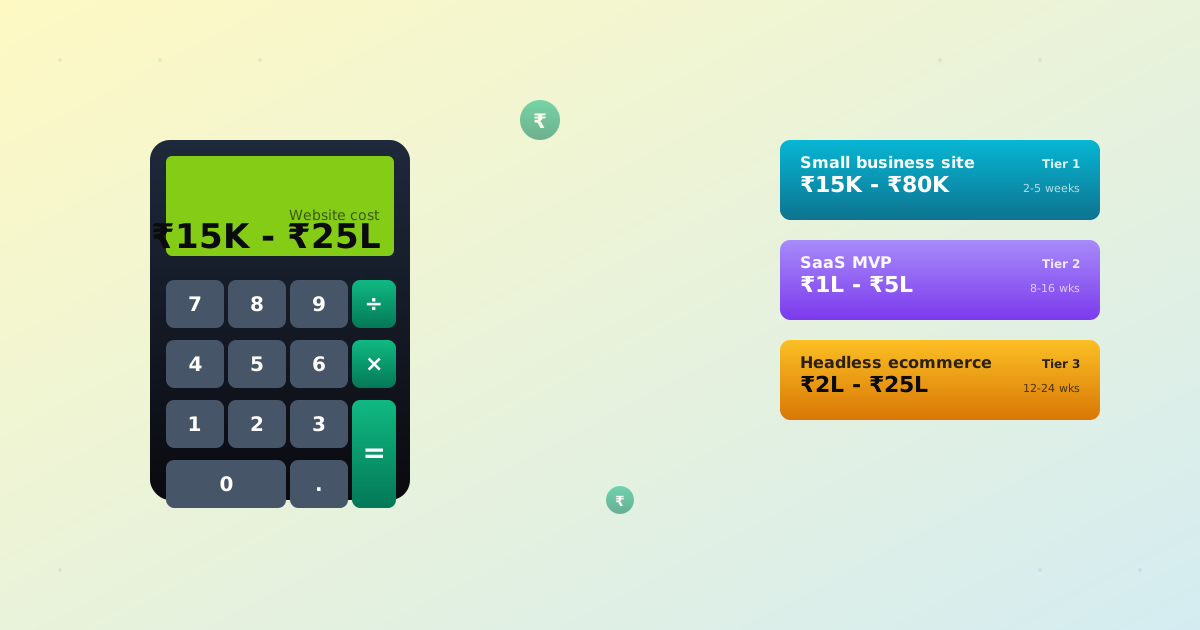
Real 2026 INR website costs by type: ₹5-25K static, ₹15-80K small business, ₹20K-2L Shopify, ₹2-8L headless, ₹5-25L SaaS, plus the hidden costs founders miss.
 Business
How to Attract Clients Online in India 2026: An Honest Playbook for Small Businesses
Attracting clients online is not one tactic; it is four jobs: be findable, be credible, convert visitors, and follow up fast. The honest playbook for India, 2026.
 Business
Website Development Cost in India 2026: Real Prices from a Dev Agency
Exact INR pricing for every type of website in India 2026, landing pages, WordPress, Shopify, web apps, SaaS, and mobile apps. No ranges that span ₹50K to ₹50L.
 web development
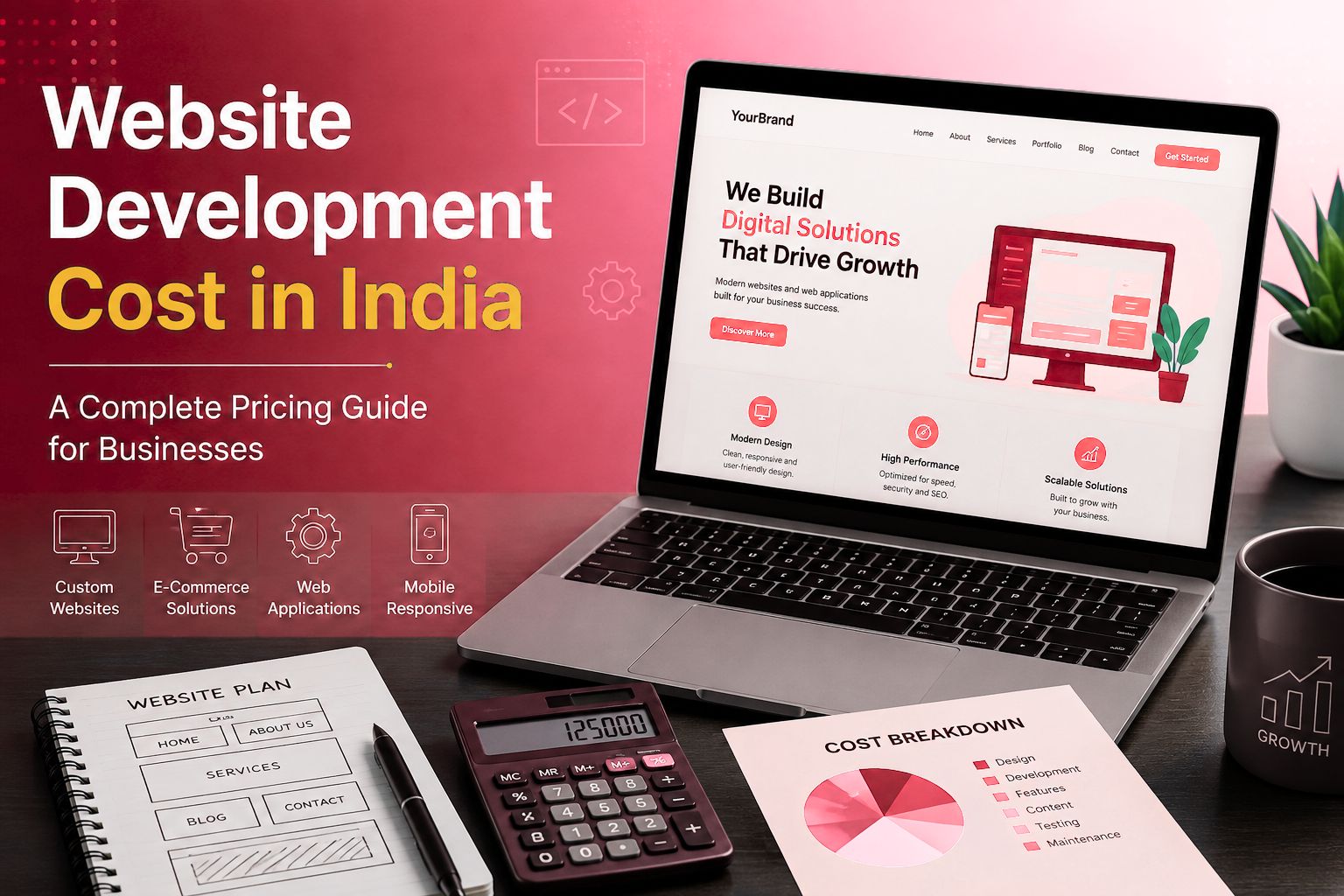
Website Development Cost in India in 2026 | Complete Pricing Guide
Planning to build a website for your business? Explore website development costs in India, understand what affects pricing, and choose the right solution for your needs.
BusinessHow to Build a SaaS MVP in India 2026: Cost, Stack, and Timeline
The founder-honest guide to SaaS MVP development in India 2026: what to build and what to cut, the stack we use, real INR cost and timeline, build versus no-code.