We build Next.js, Shopify, Laravel, Flutter, in Noida, India. Free 1-page audit, no obligation.
Get a free quote- OCPP and UPI: How EV Chargers in India Can Take Payments Without an AppJuly 27, 2026
- How to Take Orders on WhatsApp for Your Small Business in India (2026)July 24, 2026
- The website that kept Meera's oven warmJuly 21, 2026
- Build a Subscription Billing System in India (2026)July 20, 2026
- What You Will Learn in This Blog
- How Much Does Website Development Cost in India?
- Key Factors That Affect Website Development Cost
- Estimated Website Development Costs in India
- WordPress Website Versus Custom Website Cost
- Additional Website Costs Businesses Should Consider
- How Long Does It Take to Build a Website?
- Common Hidden Costs in Website Development
- Solo Developer Versus Website Development Company
- How to Plan Your Website Development Budget
- How to Choose the Right Website Development Partner
- Final Thoughts
 web development
Website Development Cost in India in 2026 | Complete Pricing Guide
Building a website is no longer limited to creating an online presence. For many businesses, a website works as a sales channel, information platform, lead generation system, customer support resource, and brand-building asset. However, one of the first questions business owners ask is, “How much does website development cost in India?”
The answer depends on several factors, including the website type, number of pages, design requirements, technology, features, integrations, and long-term maintenance needs. A basic website may require a modest investment, while a custom business platform can involve significantly more planning and development work.
This guide explains the major factors that influence website development costs in India. It also helps businesses understand what they are paying for, how to compare development proposals, and how to choose a website solution that supports their long-term goals.
What You Will Learn in This Blog
In this guide, we will cover:
- The main factors that influence website development costs
- Estimated costs for different types of websites
- Basic business website pricing
- Corporate and professional website pricing
- Ecommerce website development costs
- Custom website and web application costs
- WordPress and custom website pricing differences
- Domain, hosting, maintenance, and additional expenses
- Website development timelines
- Common hidden costs businesses should consider
- How to choose between a solo developer and a development company
- Practical tips for planning a website budget
- Frequently asked questions about website development in India
How Much Does Website Development Cost in India?
Website development costs in India can vary widely because every business has different requirements. A simple informational website may cost considerably less than a custom platform with user accounts, payment systems, dashboards, automation, and third-party integrations.
As a general estimate, a basic business website may cost between ₹20,000 and ₹60,000. A professionally designed corporate website may range from ₹50,000 to ₹1,50,000 or more. Ecommerce websites and custom web applications can require a larger investment depending on their features and technical complexity.
These figures are general estimates rather than fixed prices. The final cost should be based on the project scope, expected business outcomes, technology requirements, and level of customization. Comparing only the lowest quotation may overlook important differences in quality, security, scalability, and post-launch support.
Key Factors That Affect Website Development Cost
The cost of a website is not determined by design alone. Planning, development, testing, content preparation, integrations, security, and ongoing support can all influence the total project budget.
Website Type and Purpose
A small informational website generally requires less development work than an ecommerce platform or a custom business application. The website’s purpose affects its structure, features, technology, and testing requirements.
A company website may focus on presenting services and generating enquiries. An ecommerce website needs product management, payments, customer accounts, order processing, and delivery workflows. A custom platform may require advanced business logic and tailored user experiences.
Number of Pages
The number of pages can influence content preparation, design work, development time, and quality assurance. A five-page website usually requires less effort than a website containing dozens of service, location, product, or resource pages.
However, page count is not the only factor. A single interactive page with advanced features may require more work than several simple information pages. The complexity of each page should be considered when estimating website development costs.
Custom Design Requirements
A website based on a ready-made template can be developed more quickly than a fully customized design. Custom design involves creating layouts around the business identity, target audience, user journey, and conversion goals.
A professionally planned design can improve navigation, strengthen brand credibility, and make important information easier to find. Businesses should consider whether a lower initial design cost may limit flexibility or create challenges when the website needs to expand.
Custom Features and Functionality
Features such as appointment booking, customer portals, calculators, quotation systems, membership access, dashboards, and automated workflows can increase development costs. Each feature requires planning, interface design, coding, testing, and ongoing maintenance.
The cost also depends on whether a feature can be integrated through an existing service or must be developed specifically for the business. Custom functionality generally requires more time but may provide better control and alignment with operational requirements.
Third-Party Integrations
Many modern websites connect with external platforms. These may include payment gateways, customer relationship management systems, accounting software, email platforms, shipping services, analytics tools, or messaging applications.
Integration costs depend on the complexity of the external system and the availability of reliable application programming interfaces. Some integrations can be completed quickly, while others require custom development, data mapping, security checks, and detailed testing.
Content and Search Optimization
Website content affects both user experience and search visibility. Professional content writing, keyword research, page optimization, metadata, internal linking, and structured information may be included separately or as part of the development project.
A visually attractive website may still struggle to attract relevant visitors if its content does not address customer needs or follow basic search optimization practices. Businesses should clarify whether content and search optimization are included in the development quotation.
Estimated Website Development Costs in India
The following ranges provide a broad understanding of common website categories. Actual costs may vary based on the development company, project requirements, design quality, technology, and support scope.
Basic Business Website
Estimated cost: ₹20,000 to ₹60,000
A basic business website is suitable for startups, consultants, local businesses, and service providers that need a professional online presence. It usually includes essential pages such as Home, About, Services, Contact, and an enquiry form.
Common features may include:
- Responsive design for mobile devices
- Basic search optimization
- Contact and enquiry forms
- Service information pages
- Location and business details
- Social media links
- Basic analytics integration
The final cost may increase when the website requires custom layouts, professional content, multiple service pages, advanced animations, or additional integrations.
Professional Corporate Website
Estimated cost: ₹50,000 to ₹1,50,000 or more
A corporate website is designed for established businesses that require stronger branding, detailed service information, resource sections, lead generation features, and scalable content management.
These websites may include:
- Custom user interface design
- Multiple service and industry pages
- Blog or resource management
- Case studies and portfolio sections
- Advanced enquiry forms
- Customer relationship management integration
- Technical search optimization
- Performance and security improvements
Corporate websites often require additional planning because they serve different audiences and must communicate complex services clearly.
Ecommerce Website
Estimated cost: ₹75,000 to ₹3,00,000 or more
An ecommerce website requires more than product pages and an online payment option. It may need inventory management, customer accounts, order processing, shipping integration, tax configuration, discount rules, and customer communication systems.
Important ecommerce features may include:
- Product and category management
- Shopping cart functionality
- Secure payment integration
- Customer registration and login
- Order tracking
- Shipping and delivery integration
- Coupon and discount management
- Inventory controls
- Product search and filtering
The total cost depends on the number of products, required integrations, platform selection, custom design needs, and operational workflows.
Custom Website or Web Application
Estimated cost: ₹1,50,000 to ₹10,00,000 or more
Custom web applications are developed for businesses that require functionality beyond a standard website. These systems may include customer portals, employee dashboards, workflow automation, data management, reporting, or role-based access.
The development cost can increase because custom applications require detailed requirement analysis, system architecture, database planning, user permissions, security measures, and extensive testing.
Examples include:
- Customer management platforms
- Business process automation systems
- Online booking platforms
- Learning management systems
- Subscription-based platforms
- Vendor management portals
- Custom reporting dashboards
- Internal business applications
The final budget should be based on the required features rather than the number of pages.
WordPress Website Versus Custom Website Cost
WordPress can be a practical option for business websites, blogs, content-focused platforms, and websites that require manageable development costs. It provides access to themes, plugins, and content management features.
A custom website offers greater flexibility when a business needs unique functionality, specialized workflows, advanced performance, or complete control over the technology architecture. However, custom development generally requires a larger initial investment.
WordPress may be suitable when:
- The website is primarily content-focused
- The required functionality is available through reliable tools
- The business needs an easy content management system
- The project has a limited initial budget
Custom development may be suitable when:
- The business requires unique workflows
- Existing tools cannot meet the requirements
- The platform needs advanced integrations
- Performance and scalability are major priorities
- The website will support complex business operations
The best option depends on business requirements rather than which technology is more popular.
Additional Website Costs Businesses Should Consider
The development quotation may not include every long-term expense. Businesses should understand which services are included during development and which costs will continue after the website is launched.
Domain Name
A domain name is the website’s online address. The annual cost depends on the domain extension and registrar. Premium domain names may cost more than standard registrations.
Businesses should confirm who owns the domain and which account controls its renewal. Keeping domain ownership under the business’s control can prevent administrative problems later.
Web Hosting
Hosting provides the infrastructure required to make a website accessible online. Hosting costs vary according to website traffic, storage requirements, performance needs, security, and server resources.
A small business website may operate effectively on a standard hosting plan. Larger ecommerce websites or custom applications may require managed cloud infrastructure or dedicated resources.
Security Certificate
A security certificate helps encrypt information exchanged between visitors and the website. It is essential for protecting user data and supporting secure online transactions.
Some hosting providers include a certificate without an additional charge, while advanced security requirements may involve extra services. Businesses should verify what level of security is included.
Website Maintenance
Websites require regular updates, security monitoring, backups, performance checks, and technical support. Maintenance costs depend on the website technology, number of integrations, and frequency of changes.
A maintenance plan can help identify issues before they affect users. It may also support regular improvements as business requirements change.
Content Updates
Businesses may need new service pages, blog articles, product information, images, case studies, or campaign landing pages after launch. These updates may be included in a support package or billed separately.
Content planning should be considered during budgeting because an inactive website may provide fewer opportunities to attract visitors and generate enquiries.
How Long Does It Take to Build a Website?
Website development timelines depend on project scope, content availability, feedback speed, design complexity, and technical requirements.
A basic business website may take approximately three to six weeks. A professional corporate website may require six to twelve weeks. Ecommerce websites and custom applications can take several months because they involve additional features, integrations, testing, and operational planning.
A typical development process may include:
- Requirement discovery
- Website planning
- Content preparation
- User interface design
- Development
- Integration
- Testing
- Client review
- Launch
- Post-launch monitoring
Delays can occur when content, approvals, technical access, or project requirements are not available on time.
Common Hidden Costs in Website Development
Some website expenses may not be visible in the initial quotation. Businesses should ask for a detailed scope before approving the project.
Potential additional costs include:
- Premium themes or plugins
- Paid software integrations
- Payment gateway charges
- Professional content writing
- Photography or licensed images
- Search optimization services
- Additional design revisions
- New features requested after approval
- Website maintenance
- Hosting upgrades
- Data migration
- Training and technical support
A transparent proposal should explain what is included, what is excluded, and how additional work will be priced.
Solo Developer Versus Website Development Company
A solo developer may be suitable for smaller projects with a clearly defined scope. Solo developers can sometimes offer lower prices because they have fewer operational expenses.
A development company may provide access to multiple specialists, including designers, developers, project managers, content professionals, and quality assurance teams. This can be useful for complex projects that require structured planning and long-term support.
Before choosing a provider, consider:
- Relevant project experience
- Portfolio quality
- Technical expertise
- Communication process
- Project timeline
- Support availability
- Ownership of website files
- Security practices
- Maintenance options
- Client reviews and references
The lowest quotation is not always the best value. A website should be evaluated according to its expected business impact and long-term reliability.
How to Plan Your Website Development Budget
Businesses can make better decisions by defining their goals before requesting quotations. A clear project brief helps development teams recommend suitable technology and estimate costs more accurately.
Start by identifying:
- The website’s primary purpose
- Target customers
- Required pages
- Important business features
- Content requirements
- Integration needs
- Expected website growth
- Budget range
- Launch timeline
- Ongoing maintenance requirements
It may be better to develop essential features first and add advanced functionality in later phases. This approach can reduce initial costs while allowing the website to grow with the business.
How to Choose the Right Website Development Partner
A website development partner should understand both technical requirements and business objectives. The right team should ask detailed questions before providing a final recommendation.
Look for a partner that provides:
- Clear project scope
- Transparent pricing
- Realistic timelines
- Documented deliverables
- Responsive communication
- Relevant technical experience
- Quality testing
- Security considerations
- Post-launch support
- Clear ownership terms
A professional development process can reduce unexpected costs and improve the chances of delivering a website that remains useful after launch.
Final Thoughts
Website development costs in India depend on what a business needs the website to achieve. A basic online presence may require a limited investment, while a custom platform can involve extensive planning, development, testing, and ongoing support.
Businesses should avoid choosing a website only because it has the lowest initial price. A well-planned website can support brand credibility, customer engagement, lead generation, business operations, and long-term growth.
The most effective approach is to define clear goals, understand the required features, compare detailed proposals, and select a development partner that provides transparency and reliable support.
A website should be viewed as a long-term business asset. The right investment depends on the value it creates, the problems it solves, and its ability to adapt as the business grows.
Frequently asked questions
How much does website development cost in India?
What does an ecommerce website cost?
What does a custom web application cost?
Should I choose WordPress or a custom build?
What costs are not included in a development quote?
Why do quotes for the same website vary so much?
Founder of buildbyravirai, a web development agency based in Noida, India. 5+ years shipping Next.js, WordPress, Shopify, and Laravel projects for clients in India, USA, Canada, and the UK.
Working with us in your city
Keep Reading
 Business
Website Development Cost in India 2026: Real Prices from a Dev Agency
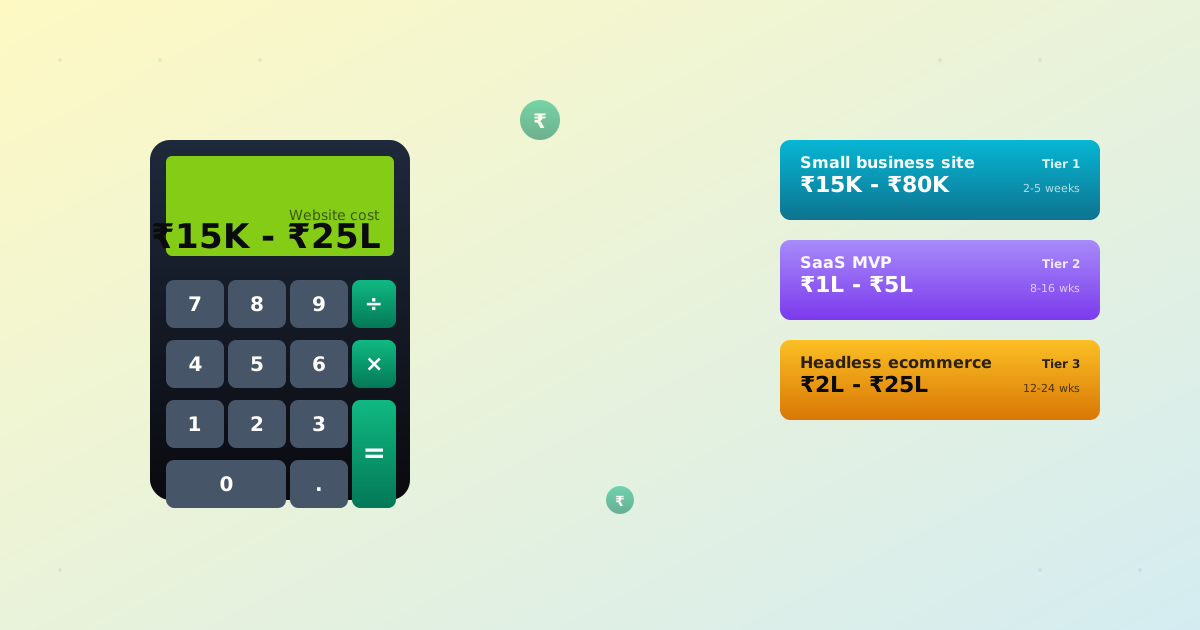
Exact INR pricing for every type of website in India 2026, landing pages, WordPress, Shopify, web apps, SaaS, and mobile apps. No ranges that span ₹50K to ₹50L.
 Business
Website Builder vs Custom Website in India 2026: An Honest Decision Guide
Wix, Squarespace, Shopify, or a custom build? The no-spin guide for Indian businesses in 2026: when a builder is smart, the real three-year cost, and lock-in.
 Pricing
Website Development Cost in India (2026 Guide)
Real 2026 INR website costs by type: ₹5-25K static, ₹15-80K small business, ₹20K-2L Shopify, ₹2-8L headless, ₹5-25L SaaS, plus the hidden costs founders miss.
 Guides
Hotel Website Development in India: What Booking Features, OTA Integrations, and 2026 Pricing Actually Look Like
Indian hotels leak 30-50% of direct bookings to OTAs because their websites can't handle real-time availability or channel sync. Real 2026 pricing (₹40K-8L).
 Guides
Outsourcing Web Development to India in 2026: The Honest Guide for US, Canadian & UK Startups (Real USD Costs + 9 Risks)
US founders pay $150-300/hr, UK agencies £100-200/hr, Indian senior devs $30-60/hr. The savings are real, so are the 9 hidden risks. Honest 2026 USD pricing inside.