We build Next.js, Shopify, Laravel, Flutter, in Noida, India. Free 1-page audit, no obligation.
Get a free quote- Logo Design and Report Design: What Indian Businesses Get Wrong22 August 2026
- Manufacturing Software for Indian MSMEs Industry 4.0 GuideAugust 22, 2026
- Top Healthcare IT Solutions Improving Patient ExperienceAugust 12, 2026
- Top IT Solutions Transforming Financial Services in 2026August 10, 2026
- The 4 things that determine your website cost
- Cost by website type, precise 2026 INR ranges
- Cost by who builds it
- Cost by city in India
- Hidden costs founders miss
- Monthly maintenance costs in 2026
- What you should NOT pay for
- Negotiation reality, what's negotiable, what isn't
- GST and invoicing, the part nobody explains
- Realistic timeline expectations
- Free vs paid stack components in 2026
- When to hire which tier of developer
- Red flags in pricing quotes
- FAQ
- Where to start
- TL;DR, Website Development Cost in India 2026
 Pricing
Website Development Cost in India (2026 Guide)
"How much does it cost to build a website in India?" is the most-asked question we get on WhatsApp at buildbyravirai. And every honest answer starts with "it depends", because a 1-page contact form and a multi-tenant SaaS with payments both fall under "website," and they're 100x apart in cost. This guide is the precise breakdown we wish founders had before they signed their first dev contract: real 2026 INR ranges by website type, who charges what tier, the hidden costs nobody itemises in a quote, and the red flags that signal a vendor will burn ₹2L of your budget for ₹50K of actual work.
We're a Noida-based solo developer-team / boutique-agency hybrid. We've quoted on 400+ projects, won ~80, and rescued ~30 builds that started with cheaper vendors and ended in our inbox. The numbers below come from real Q1-Q2 2026 quotes, not marketing fluff.
The 4 things that determine your website cost
Before any number is meaningful, four variables set the floor and ceiling on what you'll pay:
- What type of website, static info site, marketing site, ecommerce, SaaS, mobile-app-required, or specialised (EV CSMS, hotel booking, fintech). A 1-page WordPress site and a multi-tenant Next.js SaaS are both "websites," but they're 50-100x apart in cost.
- Who builds it, solo developer (cheapest, highest variance), solo developer team / boutique agency (mid, balanced), large established agency (most expensive, most predictable), or senior offshore-billing-to-foreign-clients (USD rates).
- Custom design vs template, template-led builds with light customisation cost 40-60% less than fully custom design. The trade-off is differentiation and conversion uplift.
- Ongoing maintenance commitment, a build-and-walk-away project costs less upfront but more in 18-month total cost of ownership. A build + monthly retainer relationship costs more month-1 but cheaper year-2.
Hold these four levers in your head as you read the numbers below, every range assumes a mid-point on each. Shift any lever and the cost moves accordingly. For a sense of how solo developer vs agency tiers differ in practice, we've written a separate guide.
Cost by website type, precise 2026 INR ranges
These are real 2026 ranges from Indian solo developer-team-to-boutique-agency tier (where we operate). Large agencies charge 2-4x these numbers; pure solo developers charge 25-40% less but with the risks we've documented elsewhere.
1-page marketing site, ₹5K to ₹25K
Single page, hero + features + contact form. Wix, WordPress with a free theme, or static HTML/Astro. Timeline: 1-2 weeks. Good for: validating an idea, a personal portfolio, a single-product launch page. What you don't get: SEO depth, blog, multi-page architecture, custom design. Anyone quoting under ₹5K is either AI-generating it or selling you a Wix template they spent 4 hours on.
5-8 page small business website, ₹15K to ₹80K
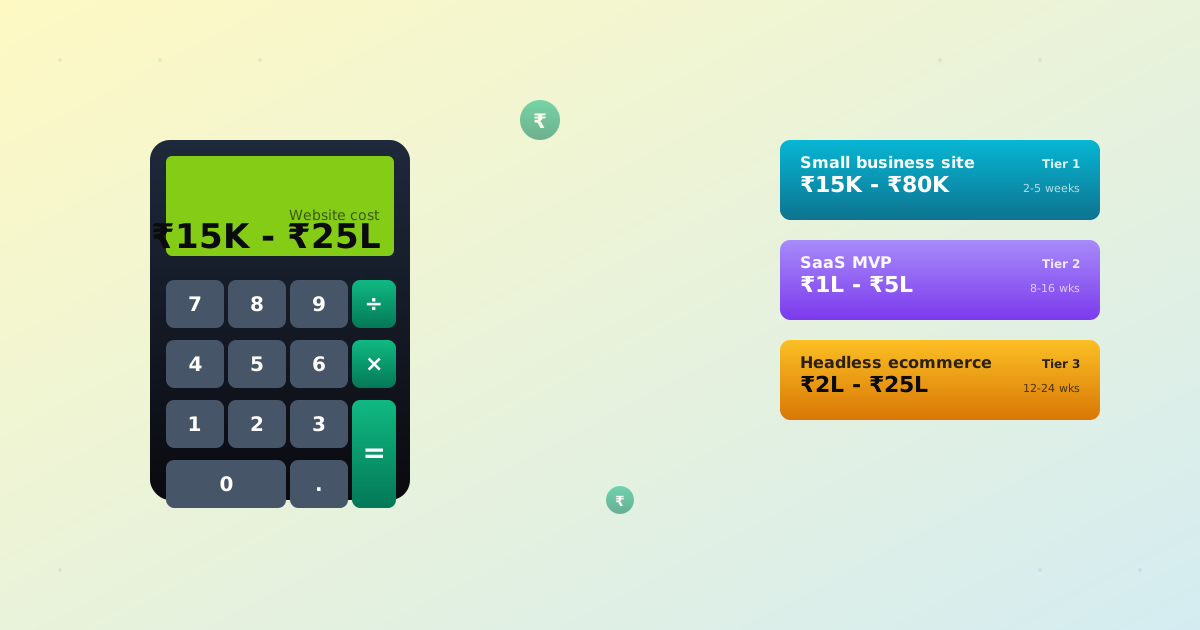
About, Services, Contact, Blog, Testimonials, Pricing. WordPress with a customised theme, or Next.js with a CMS like Sanity/Strapi. Timeline: 2-5 weeks. Good for: consultants, small agencies, local services, B2B SMBs. ₹15-30K = template-led WordPress. ₹40-80K = custom Next.js with proper SEO foundation and core web vitals.
Shopify storefront (standard), ₹20K to ₹80K
20-100 products, paid Shopify theme (Dawn, Impulse, Prestige), Razorpay integration, basic Shopify Markets setup, GA4. Timeline: 3-6 weeks. Good for: D2C brands at ₹50L-3Cr ARR who don't need a custom storefront yet. Cheap end (₹20-30K) is essentially theme installation + product upload. Higher end (₹60-80K) includes proper category architecture, conversion-optimised PDPs, and abandoned-cart automation.
Shopify custom theme + integrations, ₹80K to ₹2L
Custom Liquid theme, multi-currency, Klaviyo email flows, Yotpo reviews, Judge.me, custom checkout extensions (Shopify Plus), advanced GA4 + Meta CAPI. Timeline: 6-10 weeks. Good for: D2C brands at ₹3-15Cr ARR that have outgrown templates. This tier is where most serious Shopify spend sits in 2026.
Headless ecommerce (Next.js + Shopify), ₹2L to ₹8L
Next.js 14/15 storefront consuming Shopify Storefront API, deployed on Vercel, ISR/SSG for performance, custom checkout via Hydrogen or extensions. Timeline: 10-20 weeks. Good for: brands with international expansion or sub-1s LCP requirements. We've covered the migration economics in detail, short version: payback in 6-9 months only above ₹3Cr ARR.
WooCommerce custom store, ₹50K to ₹2.5L
50-500 products, custom WordPress/WooCommerce theme, Razorpay + Cashfree, GST-compliant invoicing, Shiprocket integration, custom shipping zones. Timeline: 6-14 weeks. Good for: brands that want full ownership (no monthly Shopify fee), have technical capacity to maintain, or sell B2B/wholesale where Shopify pricing tiers don't fit.
Custom Next.js / Laravel SaaS marketing site, ₹40K to ₹1.5L
Pre-product SaaS marketing site: hero, features, pricing table, blog, docs, waitlist signup, Stripe/Razorpay integration for early-access pricing. Next.js + headless CMS or Laravel + Tailwind. Timeline: 4-10 weeks. Good for: pre-seed/seed SaaS that needs a credible web presence before the product itself ships.
SaaS MVP (backend + frontend, multi-tenant), ₹1L to ₹5L
Authenticated app: signup/login, tenant isolation, billing (Stripe/Razorpay subscriptions), 3-6 core features, admin dashboard. Next.js + Postgres / Laravel + MySQL / Node + Mongo. Timeline: 8-16 weeks. Good for: founders shipping their first paid product. Anything under ₹1L for "SaaS MVP" is either a no-code Bubble build or a template wrapper that won't scale past 100 users.
Full SaaS production, ₹5L to ₹25L+
Production-grade SaaS: multi-tenant with proper isolation, role-based access, audit logs, billing with proration + tax, webhooks, public API, admin tooling, monitoring (Sentry/Datadog), CI/CD, staging environments. Timeline: 4-12 months. Good for: funded startups building serious B2B SaaS. The 5x range depends on feature surface area, integrations, and compliance (SOC2, ISO 27001 add ₹3-8L).
Mobile app, single platform Flutter/RN, ₹50K to ₹1.5L
iOS-only or Android-only build via Flutter or React Native. 5-10 screens, basic API integration, push notifications, payment integration. Timeline: 6-12 weeks. Good for: validation builds, side-projects, or apps where one platform clearly dominates the user base.
Mobile app, both platforms, complex, ₹1.5L to ₹5L
iOS + Android via Flutter/RN. 15-30 screens, full backend integration, push, payments, offline mode, complex state management, app store deployment, beta testing. Timeline: 10-20 weeks. Good for: real product launches with mobile-first audiences. App store submission and review eats 1-3 weeks.
EV charging CSMS (OCPP 1.6-J), ₹2L to ₹15L+
Charging Station Management System: WebSocket OCPP backend, operator dashboard, mobile app (user + operator), RFID auth, billing with tariffs, payment gateway, reports. Timeline: 12-24 weeks. We built and operate PlugEV, short version: ₹2L gets you a barebones MVP, ₹8-15L gets you something a 50-charger operator can actually run on.
Cost by who builds it
The same 5-page small business site can cost ₹15K from a solo developer or ₹3L from a large agency, for arguably similar deliverables. The price difference funds different things:
Solo developer, ₹15K to ₹80K typical
Cheapest tier. One person doing design + dev + deployment. Best for: simple, well-scoped projects under ₹1L with flexible timelines. Risks documented in our solo developer guide, single point of failure, scope creep without backup, post-launch support gaps.
Solo developer team / boutique agency, ₹50K to ₹5L
3-8 person teams operating with agency-grade process but solo developer-grade overhead. Best for: most projects in the ₹50K-5L range, where you want predictable delivery without paying for a 30-person agency's sales team. We sit here. Typical projects: custom Shopify, SaaS MVPs, mobile apps. Reach us via the contact page or hire-web-developer.
Large agency, ₹2L to ₹25L+
20+ person agencies with dedicated PMs, designers, QA, account managers. Best for: enterprise clients who need formal SOWs, NDAs, on-site presence, and budget approval cycles that span quarters. Pay 2-4x what we charge for similar deliverables; in return you get predictability, written documentation, and a brand the procurement team has heard of.
Senior Indian individual at offshore rates, USD billing
Senior Indian devs billing US/UK/EU clients directly at USD rates earn ₹3-6L for what a large Indian agency would charge ₹15L. They typically won't take Indian-client projects below ₹3L because of opportunity cost. Best for: international clients only.
Cost by city in India
Geography still matters in 2026, partly cost-of-living, partly talent density, partly client expectation. We've detailed each market in our cities directory, but the cost summary:
- Noida / Greater Noida / Tier-2 Indian metros, baseline pricing. Same Bangalore-quality output at 25-40% less. We're based in Noida Sector 62.
- Mumbai metros, 20-40% premium over Noida for equivalent work. Higher cost of living, more competition for senior talent.
- Delhi / Gurgaon, 10-25% above Noida. Senior talent has largely migrated from Delhi proper to Gurgaon (Cyber City) or Noida.
- Bangalore specifically, most expensive Indian market for product-startup work. Worth the premium for AI/ML-heavy or VC-backed product builds.
- Hyderabad / Pune / Chennai, 10-25% below Bangalore, strong engineering talent, great value tier.
- Senior offshore-billing-to-US/Canada, USD rates that translate to ~50-70% below local agency rates for the foreign client, but ~30-50% above Indian-client rates.
Hidden costs founders miss
The build cost is only ~60-70% of year-1 total cost. The line items below get omitted from most quotes and surprise founders at month 3:
- Domain, ₹500-2,000/year. .com is cheapest, .in slightly more, premium TLDs (.io, .ai, .dev) ₹2-10K/year.
- Hosting, ₹500/month (shared WordPress) to ₹50K+/month (production SaaS on AWS/Vercel + Postgres + Redis + CDN). Most marketing sites: ₹2-8K/month.
- SSL, free almost everywhere in 2026 via Let's Encrypt / Cloudflare. If anyone charges you for SSL, it's a red flag.
- Email hosting, ₹50-200/user/month (Google Workspace, Zoho Mail, Microsoft 365). Don't use your dev's "free email" setup, it lands in spam.
- Payment gateway, Razorpay/Cashfree 2-2.5% per transaction (domestic), Stripe 3.5%+ (international). Plus GST on the fees.
- Translation / multi-language, ₹5-25K per additional language for content + dev work. Native review by a professional translator is non-negotiable for premium brands.
- Photography / copywriting, ₹15K-1L for proper brand photography or studio copywriting. AI is okay for blog content but rarely good enough for hero/landing copy.
- CDN + image optimisation, mostly included with Vercel/Cloudflare in 2026. Standalone: ₹2-10K/month for high-traffic sites.
- Backups, ₹500-3K/month for managed backups. On Shopify and Vercel, basic backup is built-in; managed WordPress hosts (WP Engine, Kinsta) include it.
- Maintenance retainer, ₹5K-50K/month depending on stack and changes-per-month. Detailed below.
Monthly maintenance costs in 2026
- Static site (Astro/HTML on Netlify/Vercel), ₹0-500/month. Just domain renewal.
- WordPress site, ₹3-15K/month for plugin updates, security patches, backups, minor content/design changes.
- Shopify store, ₹5-25K/month. Shopify subscription (₹2-15K/month plan) plus theme/integration maintenance.
- Next.js / custom React, ₹15-50K/month if active changes, less if stable. Vercel hosting ₹1.5-15K/month depending on bandwidth/functions.
- SaaS production, ₹30K-2L/month covering hosting (AWS/Vercel + DB), monitoring, on-call, feature/bug iteration.
What you should NOT pay for
Common line items vendors charge for that are either free or already included:
- Hosting they own and resell to you, they buy at ₹400/month, charge you ₹2K/month, lock you to their infrastructure. Always host in your own account.
- "SEO setup" ₹15-50K, usually just basic schema markup, meta tags, and sitemap submission. If it's not a full audit + content plan, it's not worth more than ₹5K.
- "Google submission", Google indexes via crawl + sitemap. Submitting your URL is free and takes 2 minutes via Search Console.
- Shopify backup add-ons, Shopify already backs up your store. The "backup" plugins are unnecessary unless you have custom apps writing data outside Shopify.
- SSL certificates, free via Let's Encrypt, included in Cloudflare/Vercel/Netlify. Anyone charging ₹3-10K/year for SSL is taking advantage.
Negotiation reality, what's negotiable, what isn't
Indian dev quotes are negotiable in 2026, but only on certain levers. Pushing on the wrong ones makes you look amateur and burns vendor goodwill.
Negotiable
- Scope, drop a feature, save 15-30% of the project cost.
- Timeline, relaxed deadlines = lower price (the vendor can fit you between premium projects).
- Design rounds, 3 rounds vs 5 rounds is real cost difference.
- Maintenance retainer, annual commitment in exchange for 15-25% discount on build cost.
- Payment milestones, split into 4 milestones instead of 2 helps cashflow, vendor will usually agree.
NOT negotiable
- Senior dev hourly cost, they have other projects at full rate; pushing here = junior dev assigned.
- Hosting / payment gateway / third-party SaaS fees, pass-throughs, no margin to cut.
- GST 18%, statutory, not negotiable for compliant invoices.
- Refund clauses if you cancel mid-project, milestones already delivered are not refundable.
GST and invoicing, the part nobody explains
Every legitimate Indian dev vendor charges 18% GST on services. Headline price ₹1L = invoice total ₹1.18L. If a vendor offers a "cash discount" to skip GST, they're asking you to fund their tax evasion, and you lose ITC (input tax credit) you could've claimed if you're a registered business. Always insist on GSTIN-compliant invoices.
- Domestic Indian clients, 18% GST applied (IGST if vendor and client are in different states, CGST+SGST if same state).
- Foreign clients, billable under LUT (Letter of Undertaking) at 0% GST. Indian vendor exports services tax-free. This is why senior Indian devs can bill US clients in USD without GST.
- TDS deduction, if you're the client (a registered company) paying an Indian vendor, you must deduct TDS: 1% if vendor is a partnership/LLP, 2% if company, 10% if individual under section 194J. Pay net of TDS, give TDS certificate.
- Invoice must include, vendor GSTIN, SAC code (998314 for software dev), HSN if applicable, sequential invoice number, your GSTIN.
Realistic timeline expectations
- Small marketing site, 2-4 weeks. Anyone promising under 1 week is templating, not building.
- Medium ecommerce (Shopify custom theme), 6-10 weeks. Faster with paid theme, slower with full custom design + integrations.
- Headless ecommerce migration, 10-20 weeks. SEO preservation alone adds 3-4 weeks if done properly. See our headless migration guide for the full breakdown.
- Mobile app MVP (one platform), 6-12 weeks. App store review adds 1-3 weeks at the end.
- SaaS MVP, 8-16 weeks. The first 2 weeks are scoping + architecture, not coding.
- Production SaaS, 4-12 months for v1, then perpetual iteration.
- Hotel booking website with OTA sync, 8-16 weeks. See our hotel website guide for feature/pricing detail.
- EV CSMS, 12-24 weeks minimum. OCPP testing and hardware integration is half the timeline.
Anyone promising a "website in 3 days" in 2026 is either dropping you into a SaaS template (Wix/Squarespace) or AI-generating with Lovable/v0 and walking away, both of which you can do yourself for ₹0 if that's the bar.
Free vs paid stack components in 2026
- WordPress, free core, ~₹0-30K/year in premium plugins (Elementor Pro, ACF Pro, RankMath Pro, WP Rocket).
- Next.js / React / Laravel / Flutter, fully free, MIT/BSD licensed. No per-user fees.
- Shopify, ₹2K/month (Basic), ₹7K/month (Shopify), ₹30K/month (Advanced), ₹2L+/month (Shopify Plus). Plus 2% transaction fee unless using Shopify Payments.
- Webflow, ₹1.5-15K/month depending on plan. Heavier than Shopify on monthly fees relative to features.
- Vercel hosting, free hobby tier, ₹1.5K/month Pro, scales by bandwidth + functions for production.
- AWS / GCP / Azure, pay-as-you-go, ₹500-50K/month typical for small-to-mid SaaS.
- Razorpay / Cashfree, no monthly fee, 2-2.5% per transaction.
When to hire which tier of developer
Your annual business revenue + project complexity determines the right vendor tier. Picking too cheap costs more in rebuilds; picking too expensive starves your marketing budget.
- Below ₹5L/year revenue or pre-revenue side-project, solo developer (₹15-80K project) or a high-quality template. Don't over-spend until you have product-market signal.
- ₹5L-2Cr/year revenue, solo developer team / boutique agency tier (₹50K-5L project). This is where most Indian SMBs sit and where we operate.
- ₹2Cr+/year revenue, mission-critical product, senior boutique agency (₹3-15L) or a serious large agency (₹10-25L+).
- VC-funded startup, post-Series A, in-house engineering hires + a senior dev/design agency on retainer (₹5L/month+). At this scale, project-based work is the wrong model.
If you're also hiring for SEO at the same time, the solo SEO consultant guide and the city-by-city solo developer pricing cover the parallel decisions.
Red flags in pricing quotes
- Too cheap to be real, ₹5K for an ecommerce site means it's a template you'll outgrow in 6 months, with the vendor's branding-licence as the catch.
- No itemised breakdown, vague "website ₹50K" with no scope, deliverables, or feature list. You will get exactly nothing extra and exactly whatever they decide.
- No signed scope document, verbal scope = infinite scope-creep arguments later. Insist on a written SOW.
- No payment milestones, "pay 100% upfront for ₹20% discount" is how disappear-with-deposit fraud works.
- Hosting / domain required only with them, vendor lock-in. You should own domain (registrar in your name) and hosting (account in your name) from day 1.
- No portfolio of similar work, they'll learn on your project at your cost. Specialist work (Shopify Plus, OCPP, fintech) demands portfolio evidence.
FAQ
Q1. Will AI website builders (Lovable, v0, Cursor) replace developers in 2026?
For 1-page marketing sites and prototypes, yes, often. For anything with payments, multi-tenancy, integrations, or production reliability, no. The AI generates code; a senior developer architects, debugs, and ships. We use AI tooling extensively ourselves to ship faster, but the engineering judgement is still human-driven.
Q2. When should I migrate from a cheap site to a senior-built one?
When your site is the bottleneck on revenue. If you're losing leads because your current site is slow, ugly, or broken, migrate. If your site "works fine" and you're bottlenecked on traffic or product, fix those first, leave the site alone.
Q3. My current site is broken, should I fix or rebuild?
Audit first. ~60% of "broken" sites we see can be fixed for ₹15-40K. The other ~40% are architecturally hopeless (legacy CMS, no proper hosting, plugin spaghetti) and rebuilding is cheaper in 18-month TCO. WhatsApp us your URL for a free audit.
Q4. How do I budget for SEO separately from website cost?
Website cost is one-time + maintenance. SEO is ongoing: ₹15K-1L/month for content + technical SEO + link building. A site without SEO investment will rank for nothing. Budget at minimum 30-50% of your website build cost annually for SEO. See hiring SEO consultants in India for tier-by-tier costs.
Q5. When should I outsource vs hire in-house developers?
Below ₹2Cr/year revenue or pre-product-market-fit, outsource. Hiring an in-house dev at ₹8-25L CTC is too much fixed cost. Post-PMF with ongoing daily product changes, start hiring in-house, keep agency on retainer for specialist work. We've seen this transition done well and poorly.
Q6. Can I trust offshore (Philippines/Vietnam/Ukraine) for cheaper rates?
Yes for very well-scoped, async, English-comfortable work, but the cultural/timezone overhead often eats the cost saving. Indian senior teams are usually price-competitive with Eastern European mid-level and time-zone friendlier for Indian/Middle East clients. For US clients, Latin America (Argentina, Mexico) is often the better trade-off than India.
Where to start
If you've read this far, you have enough vocabulary to brief a vendor properly. Three concrete paths:
- You know your project type and rough budget, send us your scope on WhatsApp, we send a flat-rate quote within 48 hours. We do Next.js builds, Shopify custom themes, SaaS MVPs, and mobile apps, full service list at /services/.
- You don't know which tier you need, book a free 20-min discovery call. We tell you honestly if you need a solo developer (see /hire-web-developer/), a boutique agency (us), or a large agency. We refer ~30% of inbound to others when we're not the right fit.
- You want to compare cities, see our Indian cities directory for vendor density, pricing, and specialist availability by metro. Same boutique-tier quality is available in Noida, Mumbai, and Bangalore, pricing varies 20-40%.
Want a precise quote for your website project? Send your scope on WhatsApp +91 74289 19927, we send a flat-rate, itemised, GSTIN-compliant quote within 48 hours. Even if we're not the right fit, we'll point you to someone who is.
Get a flat-rate quote in 48 hoursTL;DR, Website Development Cost in India 2026
- 1-page site ₹5-25K, small business ₹15-80K, Shopify ₹20K-2L, headless Next.js ₹2-8L, SaaS MVP ₹1-5L, full SaaS ₹5-25L+, mobile app ₹50K-5L, EV CSMS ₹2-15L+
- Vendor tiers: solo developer cheapest, solo developer-team/boutique mid (us), large agency 2-4x, senior offshore-billing USD
- Hidden costs: hosting ₹2-50K/mo, domain ₹500-2K/yr, email ₹50-200/user, payment gateway 2-3.5%, maintenance ₹5-50K/mo
- Don't pay for: SSL (free), Google submission (free), Shopify backups (built-in), reseller hosting (vendor lock-in)
- Negotiable: scope, timeline, design rounds, payment milestones. NOT negotiable: senior dev rates, GST 18%, third-party fees
- Red flags: too cheap, no breakdown, no SOW, hosting locked to vendor, no portfolio of similar work
- Rough rule: spend 1-2% of your annual revenue on a website build, 0.3-0.5% on monthly maintenance
Founder of buildbyravirai, a web development agency based in Noida, India. 5+ years shipping Next.js, WordPress, Shopify, and Laravel projects for clients in India, USA, Canada, and the UK.
Working with us in your city
Keep Reading
 Business
Website Development Cost in India 2026: Real Prices from a Dev Agency
Exact INR pricing for every type of website in India 2026, landing pages, WordPress, Shopify, web apps, SaaS, and mobile apps. No ranges that span ₹50K to ₹50L.
 Business
Website Builder vs Custom Website in India 2026: An Honest Decision Guide
Wix, Squarespace, Shopify, or a custom build? The no-spin guide for Indian businesses in 2026: when a builder is smart, the real three-year cost, and lock-in.
 Pricing
Is a New Website Actually Worth It for Your Small Business? The Honest ROI Math (India, 2026)
Every Indian small-business owner asks the same quiet question before spending on a website: "will I actually get my money back?" Most agencies dodge it. This is the honest ROI math, with a real worked example using Indian numbers, what different budgets actually return, when a new website is NOT worth it, and how to work out your own number in 5 minutes.
GuidesWebsite Maintenance & AMC Cost in India 2026: What You Actually Pay For
A website is not a one-time purchase. The honest guide to what website maintenance and an AMC cost in India in 2026, what is included, and when you need a plan.
 web development
Website Development Cost in India in 2026 | Complete Pricing Guide
Planning to build a website for your business? Explore website development costs in India, understand what affects pricing, and choose the right solution for your needs.