We build Next.js, Shopify, Laravel, Flutter, in Noida, India. Free 1-page audit, no obligation.
Get a free quote- DLT-Compliant Notification Service Architecture in India (2026): SMS, WhatsApp, and Email Without Silent OTP FailuresJuly 17, 2026
- Zoho Books Integration in India (2026): Connect Your Website, Store, or CRM to Your Books, What It Costs, and Build vs BuyJuly 14, 2026
- Tally Integration With Your Website or Custom Software (India, 2026): How It Actually Works, What It Costs, and When to Build vs BuyJuly 13, 2026
- OCPP 2.0.1 Security for Indian EV Charging Operators (2026): TLS/mTLS, OCSP Revocation, Offline Authorization, and Transaction ReconciliationJuly 13, 2026
- Step 1: Decide WHERE to sell (there are only 3 real options)
- Step 2: The 5 things you actually need before you can take an order
- Step 3: Payments, or how Indians actually pay online in 2026
- Step 4: Shipping & logistics (the part that quietly breaks first-timers)
- Step 5: What it actually costs to start selling online in India
- Step 6: How to get your first 10 orders (the genuinely hard part)
- When to graduate from marketplace/social to your own store
- FAQ
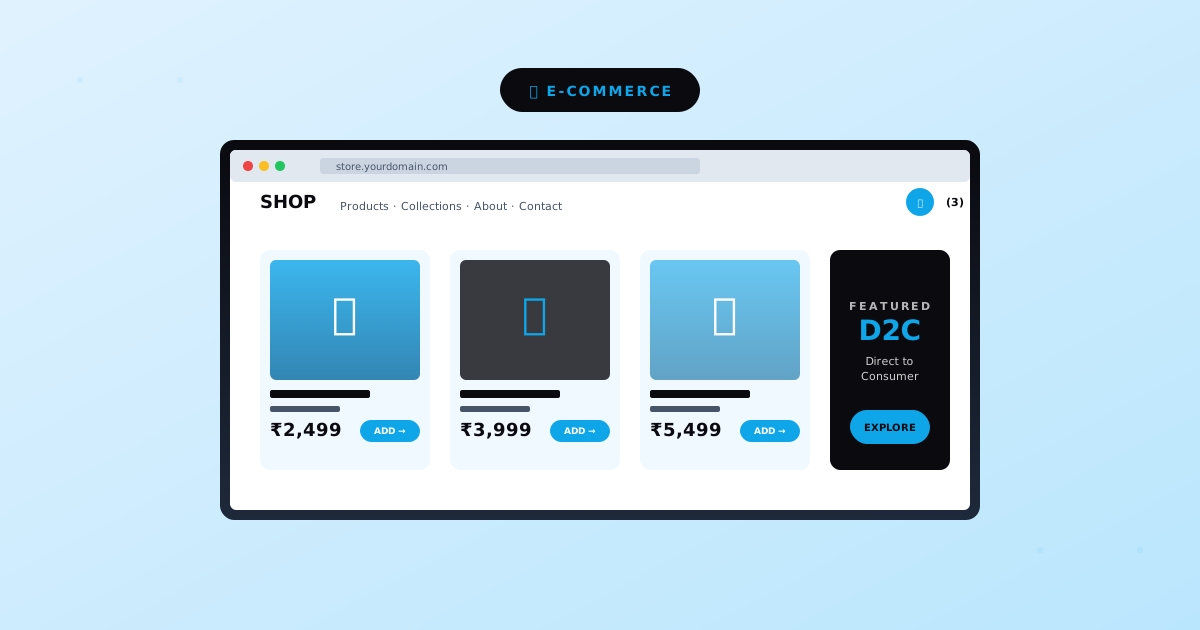 E-commerce
How to Start Selling Online in India in 2026: The Honest Beginner's Guide (From Zero to First Orders)
If you run a business in India that sells offline, or through WhatsApp DMs and Instagram replies, you've heard it a hundred times: "you should sell online." And every time, the same wall goes up. *Where do I even start? Amazon? My own website? What about payments, GST, shipping returns?* It feels like a project that needs a tech team and a lakh of rupees before you sell a single thing.
It doesn't. I run buildbyRaviRai, a web dev shop in Noida, and we've helped businesses go from zero to real online orders. One local grocery store went from 30 to 150+ daily orders (the full case study is here). This is the honest, no-jargon path: the actual decisions in the actual order you face them, with real Indian specifics (UPI, COD, GST, Shiprocket) and real costs. Read it once and the wall comes down.
Step 1: Decide WHERE to sell (there are only 3 real options)
Every online-selling decision starts here, and there are exactly three places you can sell. Most beginners agonise over this. The honest answer is that each suits a different stage, and many businesses end up using two of them together.
- Marketplaces (Amazon, Flipkart, Meesho, JioMart): You list on someone else's platform. On the plus side, you get instant traffic, built-in trust, and they handle a lot of the payments and logistics. The downsides are 15 to 35% in fees and commissions, brutal price competition, no ownership of the customer relationship, and the fact that you're one policy change away from trouble. Best for testing demand fast, or commodity products where discovery matters more than brand.
- Your own online store (Shopify, WooCommerce): Your domain, your brand, your customer data, no marketplace commission. You keep the margin and the relationship, you get full control, and you build a real asset. The catch is that you have to drive your own traffic (SEO, ads, social), and there's a setup cost. Best for anyone building a brand, repeat-purchase products, or businesses tired of marketplace fees.
- Social commerce (Instagram Shop and WhatsApp): Sell directly in DMs, or via an Instagram catalogue and a WhatsApp checkout. There's zero setup, you're probably already there, and trust in India is very high. But it's manual, it doesn't scale past a point, there's no real analytics, and payment plus order tracking is messy. Best for the very first step, or low-volume high-touch products.
My honest recommendation for most Indian SMBs: start by listing on one marketplace to validate demand AND set up a simple own store in parallel as your long-term asset. Use social and WhatsApp to drive your existing audience to whichever you want to grow. Don't try to be on five platforms at once. You'll do all of them badly.
Step 2: The 5 things you actually need before you can take an order
You don't need much to start, but you do need these five. Skipping any one of them is where first-timers stall:
- Product catalogue with decent photos. Clear photos on a clean background, honest descriptions, accurate prices. This matters more than your platform choice, because bad photos kill more online sales than anything else. A phone camera and natural light is enough to start.
- A way to take payments. A payment gateway (Razorpay is the default for India) for UPI, cards, and netbanking, plus a decision on Cash on Delivery (more on COD below).
- A shipping plan. How the product gets from you to the buyer, usually a logistics aggregator like Shiprocket or Delhivery (covered below).
- GST sorted (if applicable). Marketplaces require a GSTIN. For your own store it depends on turnover and product category. We explain the basics in what is GST invoicing.
- A simple returns/refund policy. Even one paragraph. Indian buyers check this before a first purchase from a brand they don't know, and its absence reads as 'risky'.
Step 3: Payments, or how Indians actually pay online in 2026
This trips up beginners because the Indian payment mix is unlike the West. Here's the reality. UPI dominates (often 60 to 70% of online payments), cards and netbanking fill most of the rest, and Cash on Delivery is still huge, at 30 to 60% of orders in tier-2 and tier-3 India, and higher for first-time buyers who don't trust a new brand with prepayment.
So what should you set up? A Razorpay integration (or PayU or Cashfree) covers UPI, cards, netbanking, and wallets in one go, at roughly 2% per transaction with instant-ish settlement. On Shopify you can also use Shopify Payments-style flows, but in India most stores run Razorpay. As for COD, offer it at the start, because refusing it can cost you 30 to 40% of orders from first-time buyers. Just watch the RTO (return-to-origin) rate, because COD orders get cancelled or refused more often, and every RTO costs you shipping both ways.
Step 4: Shipping & logistics (the part that quietly breaks first-timers)
Selling is the easy part. Getting the product there profitably is where margins die. You don't need your own courier deals. Use an aggregator that gives you discounted rates across multiple couriers from one dashboard:
- Shiprocket, Delhivery, iThink, Nimbuspost: Aggregators that let you compare couriers, print labels, track shipments, and handle COD remittance. Rates often start around ₹25 to 45 per 500g depending on zone. This is the standard for Indian D2C.
- Packaging: budget ₹5 to 20 per order for decent packaging. It protects the product AND is your first physical brand impression. Cheap poly bags read as cheap product.
- The RTO problem: returned or refused deliveries (especially COD) are the silent margin killer. Track your RTO rate from day one. If it's over about 15%, tighten address confirmation, because a quick WhatsApp confirmation before dispatch works wonders.
- Delivery promise: set realistic timelines (3 to 7 days for most of India) and actually communicate dispatch and tracking. Indian buyers forgive slow more than they forgive silence.
Step 5: What it actually costs to start selling online in India
Honest numbers, because 'it depends' helps nobody. Three realistic starting paths:
- Marketplace-only: near-zero upfront (just product, photos, and GST), but you pay 15 to 35% per sale in fees and commissions forever. Cheapest to start, most expensive to scale.
- Shopify own store: roughly ₹2,000 to 3,000 a month for the platform, plus about 2% in payment fees, plus theme and setup. A basic self-built store can be live in days. A properly designed, conversion-optimised one is where a developer helps. See the real Shopify development costs in India and our Shopify store launch guide.
- WooCommerce own store: no monthly platform fee, but you pay for hosting and maintenance and it needs more technical care. We compare the two honestly in Shopify vs WooCommerce for India and WordPress vs Shopify.
To get a transparent, itemised estimate for your own store, based on what you actually need (catalogue size, payment, shipping integration, design) rather than a vague 'starts at ₹X', run our website cost calculator. It's the fastest way to know your real number before talking to anyone.
Step 6: How to get your first 10 orders (the genuinely hard part)
Setting up the store is a weekend. Getting strangers to buy is the real work, and your first orders almost never come from strangers. They come from people who already know you. In priority order:
- Your existing customers and WhatsApp list. The people who already buy from you offline are your warmest market. Message them: 'you can now order online, here's the link.' This alone often produces the first 5 to 10 orders.
- Your Instagram and Facebook audience. Announce it, post the products, add the store link to bio, use Stories with the link sticker. Your followers already like you, so give them a way to buy.
- Google Business Profile. Add your store link, post products. People searching your business or category locally will find it. (Local visibility is its own lever, worth doing properly.)
- A small, targeted ad budget. Once you've proven people will buy (first 10 organic orders), ₹300 to 500 a day on Meta or Google ads to a lookalike of your buyers is how you scale past your existing network. Don't run ads before you've validated the product sells, or you'll just pay to learn what a free WhatsApp blast would've told you.
The order matters. Prove demand with people who know you (free), THEN pay to reach people who don't. First-timers do it backwards. They spend ₹20K on ads for an unproven store and conclude 'online doesn't work for my business.' It does. The sequence was just wrong.
When to graduate from marketplace/social to your own store
If you're profitable on a marketplace or selling steadily via WhatsApp, here's when it's time to invest in your own store. It's time when marketplace fees are eating more than your store would cost to run, when you have repeat customers you want to own the relationship with, or when you're ready to build a brand rather than be a line item in someone's search results. At that point the math flips and the own-store margin pays for itself. If you want help deciding, our free 30-minute audit will give you a straight answer for your specific numbers.
FAQ
Do I need GST to sell online in India?
For marketplaces (Amazon, Flipkart), yes, a GSTIN is required to sell most categories. For your own store, it depends on your turnover and what you sell. Many small sellers start under the threshold for certain goods, but if you're serious about scaling you'll want GST registration anyway. See what is GST invoicing for the basics, and confirm specifics with a CA.
Should I offer Cash on Delivery?
At the start, yes, because refusing COD can cost you 30 to 40% of first-time orders in much of India. But monitor your RTO (return-to-origin) rate closely, confirm COD orders via WhatsApp before dispatch, and consider nudging buyers toward prepaid with a small discount once you have repeat customers. COD is a tool to build trust, not a permanent default.
Marketplace or my own website, which first?
If you need to validate demand fast and have no audience, start on a marketplace. If you already have customers or followers (offline, WhatsApp, Instagram), start with your own simple store so you keep the margin and the relationship, because you already have the traffic. Most established small businesses are better off with their own store from the start. Pure beginners with no audience often test on a marketplace first.
How much should I budget to start properly?
You can validate for almost nothing (social, WhatsApp, and a payment link). For a real own store, budget for the platform (about ₹2 to 3K a month for Shopify), payment fees (about 2%), shipping, and a one-time setup and design cost if you want it to convert well rather than just exist. Use the cost calculator for an itemised estimate, and see pricing for flat INR store-build ranges.
Ready to start selling online? Get a transparent, itemised cost for your store in 2 minutes, with no vague 'starts at ₹X'.
Calculate your store costFounder of buildbyRaviRai, a freelance web development agency based in Noida, India. 5+ years shipping Next.js, WordPress, Shopify, and Laravel projects for clients in India, USA, Canada, and the UK.
Working with us in your city
Keep Reading
 Business
Website Builder vs Custom Website in India 2026: An Honest Decision Guide
Wix, Squarespace, Shopify, or a custom build? The internet gives you absolute answers and both are wrong. The honest call depends on where your business is right now. This is the no-spin guide for Indian businesses in 2026: when a builder is genuinely the smart choice, when you have outgrown it, the real three-year cost, ownership and lock-in, and the migration path between them.
 Business
How to Attract Clients Online in India 2026: An Honest Playbook for Small Businesses
Most businesses do not have a client problem, they have a leaky-bucket problem. Attracting clients is not a single tactic; it is four jobs that have to work together: be findable, be credible, convert the visitor, and follow up fast. This is the honest playbook for Indian small businesses in 2026: the four jobs, the order to fix them in, which channels actually bring clients here, and the mistakes that quietly keep them away.
 Guides
Outsourcing Web Development to India in 2026: The Honest Guide for US, Canadian & UK Startups (Real USD Costs + 9 Risks)
US founders pay $150-300/hr local. Canadian agencies bill CAD $160-260/hr. UK agencies £100-200/hr. Indian senior dev: USD $30-60/hr. The savings are real, but so are the 9 hidden risks. Real 2026 USD pricing, what to ask, where to find good shops, when to NOT outsource, and what working with a Noida senior team actually looks like.
GuidesBest Web Development Company in India 2026: An Honest Buyer's Guide (Not a Sales Pitch)
Every 'best web development company in India 2026' list is a sponsored ranking. This one isn't. We've shipped 56+ projects, audited 80+ competitors, and rescued 30+ failed projects. Here's how to actually pick a web development company in India, what to ask, what to ignore, what to pay, and what to walk away from.
GuidesOutsourcing Web Development to India in 2026: An Honest Guide for US/UK/Canada Clients
Outsourcing web development to India makes sense for some projects and is a disaster for others. After 18 months working with 30+ international clients (US, UK, Canada, UAE, Australia), here's the honest breakdown, when India outsourcing works, when it fails, real rates vs marketing rates, time-zone tactics that actually work, and the 8 questions to ask before signing any contract.