We build Next.js, Shopify, Laravel, Flutter, in Noida, India. Free 1-page audit, no obligation.
Get a free quote- Logo Design and Report Design: What Indian Businesses Get Wrong22 August 2026
- Manufacturing Software for Indian MSMEs Industry 4.0 GuideAugust 22, 2026
- Top Healthcare IT Solutions Improving Patient ExperienceAugust 12, 2026
- Top IT Solutions Transforming Financial Services in 2026August 10, 2026
 Guides
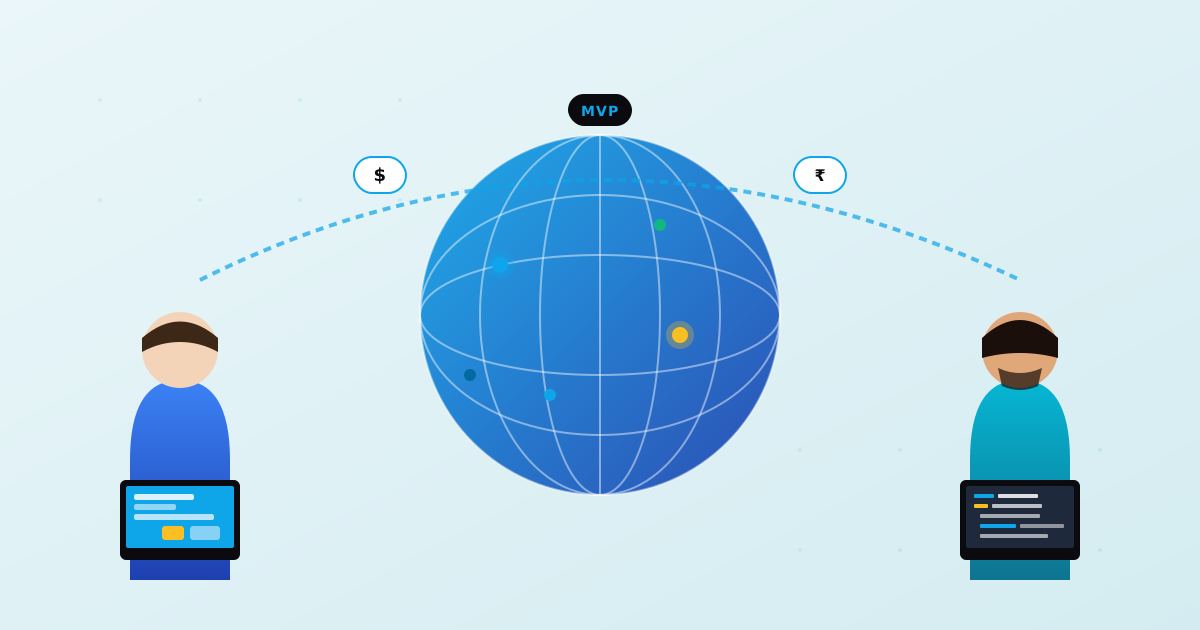
Outsourcing Web Development to India in 2026: The Honest Guide for US, Canadian & UK Startups (Real USD Costs + 9 Risks)
A typical conversation we have with a US founder in 2026: "We got a quote from a Boston agency for our SaaS marketing site, $35,000. We're post-seed, that's 6% of our runway. There has to be a better way."
There is. The same site, built by a senior Indian agency (us or any of a dozen reputable shops): $7,000-12,000. Same engineering quality, same response time during your business hours, same documentation. The savings aren't hypothetical, they're the entire reason the Indian web dev industry exists.
But outsourcing to India in 2026 also has 9 specific failure modes that founders consistently underestimate. This guide covers the real USD math, what good Indian shops look like, the warning signs of bad ones, and when you should NOT outsource (sometimes the local agency is the right call).
I run buildbyravirai, a Noida-based agency that ships for Toronto, Vancouver, New York, San Francisco, and London clients. Below is the honest founder-to-founder version of what to expect.
The actual USD savings (real 2026 rates)
Local agency rates in your market vs senior Indian offshore rates, 2026 ballparks:
Hourly rate comparison
- San Francisco / Bay Area senior dev: $200-400/hr at agencies, $150-250/hr solo
- New York senior dev: $150-300/hr agency, $120-220/hr solo
- Toronto senior dev: CAD $160-260/hr agency, CAD $120-200/hr solo
- Vancouver senior dev: CAD $150-250/hr agency, CAD $110-200/hr solo
- London senior dev: £100-200/hr agency, £80-150/hr solo
- Indian senior dev (offshore-billed): USD $30-60/hr
- Indian senior dev (domestic INR billing): ₹2,500-5,000/hr (~$30-60 USD)
The 4-6x cost differential is real and structural, Indian senior engineering wages are simply lower because cost of living is lower. The DEV is the same person Stripe / Notion / Atlassian would have hired if they'd gone offshore in 2024. The arbitrage doesn't require quality sacrifice.
Project-based pricing comparison
Take a typical mid-tier SaaS marketing site (Next.js, 8-12 pages, blog, signup flow, Stripe integration, decent design):
- Bay Area boutique agency: $25,000-60,000
- NYC mid-tier agency: $20,000-45,000
- Toronto mid-tier agency: CAD $20,000-40,000
- London mid-tier agency: £15,000-35,000
- Indian senior agency (us / peers): USD $5,000-12,000
Year-one savings on a single project: $15K-50K. Reinvest into runway, hiring, paid ads, whatever your actual scaling bottleneck is. By year 5, an Indian-dev-led startup has typically saved $200K-600K total vs the "all-local" path. Used our cost calculator and the pricing page for current INR/USD ranges.
The 9 risks (and how to mitigate each)
1. Time-zone disconnect
India Standard Time (IST) is UTC+5:30. That means:
- NYC (UTC-5): 9.5 hours behind India. NYC 9am = India 6:30pm. Excellent overlap window (NYC morning standups = India evening).
- Toronto (UTC-5): Same as NYC. Excellent overlap.
- Vancouver / SF (UTC-8): 12.5 hours behind. SF 9am = India 9:30pm. Tough overlap, either async-only or your team adjusts.
- London (UTC+0): 5.5 hours behind. Best overlap of all (London 10am = India 3:30pm).
Mitigation: For NYC/Toronto/London, schedule daily standups during the overlap window. For Vancouver/SF, run async-first (daily Loom updates, written status, weekly video call). Don't pick an Indian team if you can't commit to async, you'll be frustrated within 4 weeks.
2. Communication style mismatch
Indian senior engineers default to formal, indirect, deferential communication. Western founders default to direct, blunt, immediate. The mismatch causes friction in week 1.
Mitigation: In the kickoff call, explicitly say: "Please push back on me. If you think my idea is wrong, say so. I'd rather hear it on day 2 than week 8." Good Indian senior devs will adjust. If yours doesn't after a month, you hired junior posing as senior, fire and replace.
3. Quality variance at the bottom of the market
"Indian agency" covers everything from $3/hr Fiverr offshore shops to $60/hr senior-team firms. The quality gap is enormous. The cheap end produces template-installs that break in 3 months. The senior end produces production-grade systems indistinguishable from Bay Area output.
Mitigation: Don't hire below $25/hr for serious work. Anyone offering $5-15/hr is either using juniors, AI-generating, or both. The math doesn't support real senior engineering at that rate. See our solo developer guide for the vetting framework.
4. IP / NDA enforcement concerns
"What if they steal my code or my idea?", fair concern. Indian IP law is real but enforcement is harder cross-border than within a single jurisdiction.
Mitigation: (a) Use a mutual NDA before sharing any sensitive info, Indian shops sign these routinely, (b) put IP assignment in the contract upfront, (c) keep code in YOUR GitHub repo from day one (not theirs), (d) compartmentalize sensitive info, your offshore team often doesn't need full business context to build the frontend, (e) work with established shops that have track record + reputation to protect.
5. Compliance gaps for regulated industries
If you're building for healthcare (HIPAA), fintech (SOC 2, NYDFS-23), payments (PCI DSS), or government (FedRAMP), your Indian team needs documentation discipline, not just coding skill.
Mitigation: Ask explicitly: "Have you shipped SOC 2 / HIPAA / PCI work? Show me a sanitized example of the compliance documentation you wrote." If they can't produce it, they haven't. We've done SOC 2-aware builds; we document everything. Many Indian shops haven't and won't fit your need.
6. Hidden costs (payment, taxes, transfer fees)
Per-project costs that founders forget: (a) SWIFT wire fees ($25-45 per transfer x 3-5 transfers), (b) currency conversion spreads (~1-2% on Wise, more on banks), (c) W-8BEN forms for US tax compliance, (d) any GST your Indian vendor needs to charge (most don't for foreign clients under LUT).
Mitigation: Pay through Wise / Mercury / Revolut for best rates. Get the W-8BEN from your Indian vendor before first payment (US tax requirement). Confirm in writing they bill under LUT (no GST charged on foreign invoices).
7. Project management overhead
Working across a 10+ hour time zone gap means you can't Slack-and-resolve at 3pm. Every misunderstanding costs 24 hours minimum.
Mitigation: Hire shops that write WRITTEN scope before coding. Demand daily written status updates (Slack or Notion). Use Loom for visual feedback (your team records in your morning, India team watches in their morning). The communication discipline IS the cost of offshore, accept it and design for it.
8. Cultural/business-context gaps
An Indian dev who's never lived in the US doesn't intuitively know that "Free Shipping" needs to be more prominent than "Buy Now" on US ecommerce sites, or that NYC restaurant reservations open exactly 30 days out at 10am ET sharp. The cultural muscle memory isn't there.
Mitigation: Hire shops with prior US/Canadian/UK client work. Show them 3-5 reference sites of competitors / similar businesses in your market. Be specific about cultural conventions you want followed. Good shops listen + execute; bad ones copy template patterns from Indian ecommerce.
9. The "disappearing dev" risk
Solo Indian solo developers vanish more often than US ones. Project halfway done, no response, deposit gone.
Mitigation: (a) Hire shops with 2+ engineers (not solo developers) for any project above $5K, (b) milestone payments (30% / 30% / 30% / 10%), never 100% upfront, (c) keep code in YOUR GitHub from day one, (d) public LinkedIn + portfolio + 3+ year track record reduces flake risk to near-zero.
What working with a good Indian shop actually looks like
The 12-week experience with a senior Indian agency (e.g. us, working with a Toronto SaaS startup):
- Week 0: 30-min video discovery call. We send a written scope + fixed-price quote within 48 hours. NDA signed.
- Week 1: Kickoff video call at 10am EST (8:30pm IST our team). Figma mockups delivered end of week. Daily written status in Slack.
- Week 2: Design approved → backend kicks off. Code lives in YOUR GitHub repo. We commit daily so you see progress every morning.
- Week 3-6: Weekly 30-min video calls (your morning, our evening). Asynchronous Loom videos for design demos. Slack response within 4 hours during your business day.
- Week 7-10: Staging deploy. You + your team review. We iterate via Slack/Loom. 30% payment milestone.
- Week 11: Production launch. Documentation handover (README + architecture diagram + runbook). 30% payment milestone.
- Week 12+: 30-day post-launch bug fixes included. Then optional monthly retainer ($1,500-3,500/mo for 40-80 hours).
Total project cost for the above: USD $7,000-12,000. Compared to a Toronto agency quote of CAD $25,000-50,000 for the same scope, you save CAD $18-40K. By month 4 you've already redirected that into customer acquisition.
When you should NOT outsource to India
- Heavily regulated work without explicit experience: Banking, insurance, pharma where you need certified vendors. Indian shops can do SOC 2 / HIPAA-aware work but most don't carry formal vendor certifications US enterprise demands.
- You need someone physically on-site: If your work requires hardware integration, in-person customer interviews in your city, or office-based engineering, offshore doesn't fit. Some projects need local hands.
- Your team can't do async: If you need real-time Slack-and-resolve culture, India's time zone hurts you. Either accept async or hire local.
- Sub-$5K scope: The communication overhead eats the savings on tiny projects. For $2-3K work, use a US solo developer or template builder.
- You're not willing to write specs: Offshore needs written scope. If you want to verbally vibe with your dev all day, India isn't for you, hire local.
Where to actually find good Indian shops
- Clutch.co B2B reviews: Filter for India-based agencies with 4.5+ rating and 10+ verified reviews. Indian agencies on Clutch with that profile are vetted by Clutch's editorial team.
- GoodFirms / DesignRush: Similar B2B directories. Lower bar than Clutch but still useful filters.
- LinkedIn: Search for Indian agency founders posting consistently for 2+ years. The bar to maintain a real LinkedIn presence is high enough to filter out fly-by-night shops.
- Referrals from other US/Canadian founders: Best signal. Ask 3 founders in your network who they hired offshore. Repeat references = strong signal.
- Avoid: Fiverr / Upwork for serious work (quality floor is brutal), random outreach LinkedIn messages, "25 developers at $5/hr" ads on Indeed.
Our Toronto, Vancouver, NYC, and SF city pages have geo-specific engagement details, how we structure standups, billing, IP handling, etc. for each market.
FAQ
Should I hire a solo Indian solo developer or an Indian agency?
For projects under $5K: solo developer is fine. For anything bigger: agency (2+ engineers minimum). The bus-factor risk on a solo developer with a $20K project halfway done is real, and unfixable if they vanish. Agencies absorb that risk.
How do I pay an Indian vendor from the US/Canada/UK?
Best options in 2026: (1) Wise (formerly TransferWise), lowest fees, 1-2 day settlement, supports USD/CAD/GBP → INR. (2) Mercury, if you're a US-based company, their international wire is cheap. (3) PayPal, works but worst fees (3-4% spread). (4) Direct SWIFT wire from bank, works but $25-45 fee + worse rates. Use Wise unless you have a specific reason not to.
Do Indian vendors charge me GST?
For foreign clients (you in US/Canada/UK), Indian vendors bill under LUT (Letter of Undertaking) which means NO GST charged. Some unregistered vendors might not know this, confirm in writing they're LUT-registered. If they insist on adding 18% GST to your invoice, find another vendor, they're not equipped to handle foreign clients properly.
What about W-8BEN tax forms for US clients?
If you're a US company paying an Indian vendor, you need a W-8BEN form from them on file (foreign vendor tax compliance). Any competent Indian vendor will send this within 24 hours of asking. If they don't know what it is, big red flag, they haven't worked with US clients before.
Can I get the same quality from India as a Bay Area senior?
Yes from the right shop. Indian senior engineers who've worked at Google/Microsoft/Amazon Hyderabad or Bangalore offices have the same skill ceiling as their Bay Area counterparts, same training, similar exposure. The difference is wage cost, not capability. Junior Indian devs are not the same as junior Bay Area devs, they're both junior, both make mistakes, both learn. The math at the senior tier is what makes outsourcing work.
How long until we know if the Indian shop is working out?
Week 3-4 is the decision point. By then you've done one design review + one code milestone. If communication has been clear, responses are within your stated SLA, and the deliverables match your spec, they'll work out. If any one of those three is broken, fire them in week 4 and find a replacement. The cost of replacing in week 4 is ~$1-3K. The cost of waiting until week 12 to fire them is your entire project budget.
Can a Noida-based agency really serve clients across all four cities we operate in (NYC, Toronto, SF, Vancouver)?
Yes, and we do. We've built dedicated pages for each with the specific time-zone handling, billing currency, and compliance considerations for each market. For NYC + Toronto we run synchronous morning standups (your AM = our PM). For SF + Vancouver we run async-first with Loom + Slack. Each city engagement looks slightly different because the workflow has to match the time zone, not vice versa.
Honest summary
Outsourcing web development to India in 2026 saves US/Canadian/UK startups 40-75% on dev costs compared to local agencies. The savings are real, the quality is available at the senior tier, and the operational model is well-understood by good Indian shops.
The 9 risks (time zone, communication, quality variance, IP, compliance, hidden fees, PM overhead, cultural gaps, disappearing dev) are all mitigatable. The single biggest filter: hire shops with 2+ engineers + 3+ year track record + Clutch/LinkedIn presence + proven prior US/Canadian/UK client work. Below those bars, the savings aren't worth the risk.
If you want to talk: WhatsApp us, we'll send a written scope + fixed-price quote within 48 hours. No discovery-call funnel. We bill in USD / CAD / GBP / AED via Wise. W-8BEN on file. LUT-registered so no GST charges. Project pricing visible on our pricing page and interactive calculator.
Need a Bay Area / NYC / Toronto / London-quality build at Indian rates? Senior team in Noida, USD/CAD/GBP billing via Wise, async-first or overlap-friendly engagement. Free 30-min scoping call.
Schedule a scoping callFounder of buildbyravirai, a web development agency based in Noida, India. 5+ years shipping Next.js, WordPress, Shopify, and Laravel projects for clients in India, USA, Canada, and the UK.
Working with us in your city
Keep Reading
 Guides
Outsourcing Web Development to India in 2026: An Honest Guide for US/UK/Canada Clients
Outsourcing web development to India makes sense for some projects and is a disaster for others. The honest breakdown: when it works, when it fails, and real rates.
GuidesBest Web Development Company in India 2026: An Honest Buyer's Guide (Not a Sales Pitch)
Every 'best web development company in India 2026' list is a sponsored ranking. This one isn't. How to actually pick, what to ask, and what to walk away from.
 Business
How Indian Agencies Are Scaling Revenue Without Hiring Developers
Running a marketing, design, or creative agency in India? The ones growing fastest in 2026 outsource delivery to a trusted white-label partner and focus on clients.
GuidesHow to Choose the Right Tech Stack for Your Startup in India 2026 (A No-Hype Guide)
The no-hype guide to choosing your tech stack for Indian founders in 2026: the five questions that decide your stack, and the right default for each project.
 Guides
AI Website Builders vs Hiring a Developer in India 2026: The Honest Take
AI can build a website in two minutes, so why pay a developer? The honest answer: what AI website builders are good at, where they fall apart, and the hidden costs.