We build Next.js, Shopify, Laravel, Flutter, in Noida, India. Free 1-page audit, no obligation.
Get a free quote- DLT-Compliant Notification Service Architecture in India (2026): SMS, WhatsApp, and Email Without Silent OTP FailuresJuly 17, 2026
- Zoho Books Integration in India (2026): Connect Your Website, Store, or CRM to Your Books, What It Costs, and Build vs BuyJuly 14, 2026
- Tally Integration With Your Website or Custom Software (India, 2026): How It Actually Works, What It Costs, and When to Build vs BuyJuly 13, 2026
- OCPP 2.0.1 Security for Indian EV Charging Operators (2026): TLS/mTLS, OCSP Revocation, Offline Authorization, and Transaction ReconciliationJuly 13, 2026
- The real question isn't "what does a website cost", it's "what is NOT having a good one already costing you"
- The honest ROI math (with real Indian SMB numbers)
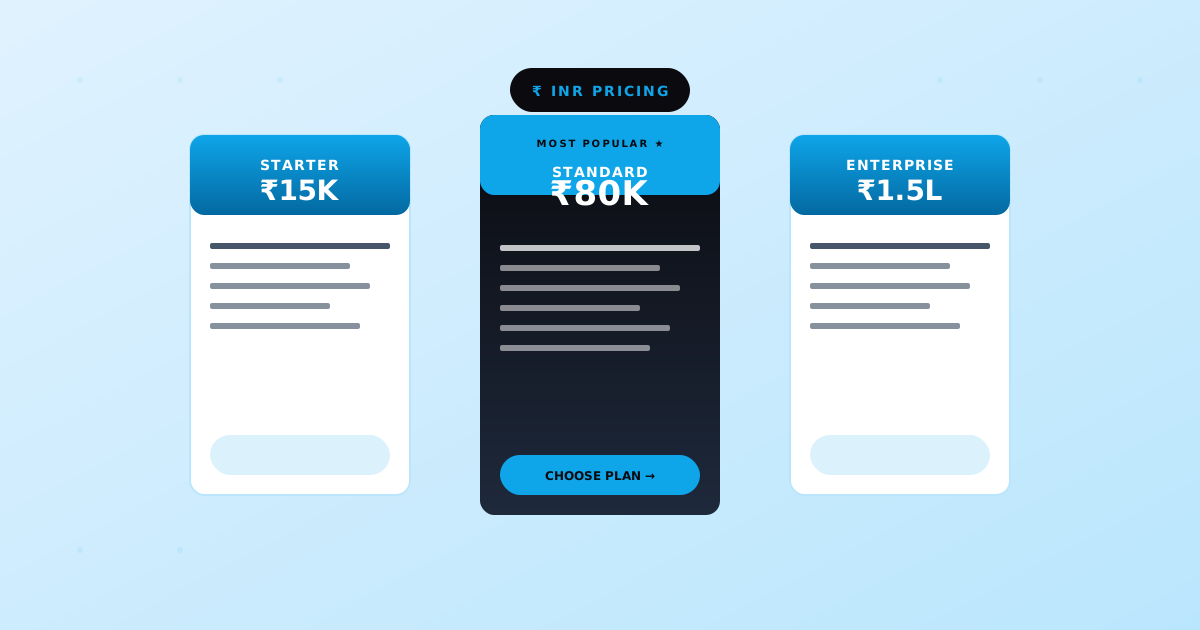
- What different budgets actually get you in 2026
- When a new website is NOT worth it (the honest part)
- The 5 things that actually drive the ROI (spend here, skip the rest)
- How to work out YOUR number in 5 minutes
- FAQ
 Pricing
Is a New Website Actually Worth It for Your Small Business? The Honest ROI Math (India, 2026)
Before any Indian small-business owner spends a rupee on a website, there's a quiet question they're too polite to ask the agency directly. "Will I actually get my money back, or is this just another expense someone is talking me into?" It's the right question. And most agencies dodge it, because the honest answer involves admitting that sometimes the answer is no.
I run buildbyRaviRai, a web development shop in Noida, and I'd rather you walk away with the real math than sign a contract you'll resent in three months. So this is the unfiltered version: a worked ROI example with actual Indian numbers, what different budgets genuinely return, the cases where you should not build a new website yet, and how to get your own number in five minutes. No hype.
The real question isn't "what does a website cost", it's "what is NOT having a good one already costing you"
Most owners frame a website as a one-time cost, a number they pay and then hope helps. That framing is what makes it feel risky. Here's the sharper frame. Every week your business runs on a broken, slow, or non-existent website, you are already paying a cost. You just can't see it on an invoice.
That invisible cost is the customer who searched your service and your city, landed on a competitor because you didn't rank, and never knew you existed. It's the person who opened your site on a phone, waited 8 seconds, and left. It's the warm referral who Googled you to 'check if you're legit,' found a 2018 site with a broken contact form, and quietly decided not to call. None of those show up in your accounts. All of them are revenue you're losing right now.
So the real comparison isn't "₹60,000 vs ₹0." It's "₹60,000 once vs the leads you silently lose every month, forever." Once you see it that way, the ROI question gets a lot easier to answer.
The honest ROI math (with real Indian SMB numbers)
Let's do an actual worked example for a typical local service business, say a clinic, a coaching centre, an interior designer, or a B2B supplier. I'll use conservative numbers, not best-case ones.
Suppose you invest ₹60,000 in a proper website (mobile-first, fast, WhatsApp-enabled, basic SEO foundation). Here's a realistic 6 to 9 month trajectory once it's indexed and ranking for a few local keywords:
- Monthly visitors: around 800 (a modest result for a local business with basic SEO and a Google Business Profile).
- Visitor to lead rate: 3% (achievable with a clear CTA and a WhatsApp button, where most weak sites sit at 0.5 to 1%).
- That's around 24 leads a month.
- Lead to customer close rate: 30% (you or your team already do this part, and the website just brings the lead to your door).
- That's around 7 new customers a month.
- Average order and customer value: ₹8,000 (adjust to your reality, because for many B2B or healthcare businesses it's far higher).
So you end up with about 7 customers times ₹8,000, which is ₹56,000 in new monthly revenue attributable to the site once it's working. Your ₹60,000 website pays for itself in roughly 5 to 6 weeks of steady-state traffic, and then it keeps producing, month after month, with only minor upkeep. That's the math agencies are afraid to show you because it sounds too good. So let me immediately complicate it honestly.
Here's the catch nobody mentions. That traffic doesn't arrive on day one. SEO compounds over 3 to 9 months, and for the first month or two you may get a trickle. The ₹56K a month is the steady state, not week one. If you need leads *this month*, a website alone won't do it. You'll pair it with Google or Meta ads, and that changes the math (faster results, ongoing ad spend). I wrote about why sites underperform in the early window in 7 Real Reasons Your Website Isn't Bringing You Clients.
What different budgets actually get you in 2026
ROI depends heavily on what you spend, but not in the way most owners assume. More money doesn't linearly mean more leads. Here's the honest breakdown of the three realistic tiers for an Indian SMB:
- ₹15,000 to 40,000 (entry): A clean, fast, mobile-first 4-to-6 page site on WordPress or a template stack. It gets you credibility, a WhatsApp and contact funnel, and a base to rank. Right for a brand-new business or one testing whether online leads work for them. The honest limit is that it's light on custom SEO and integrations. See the cheapest realistic options for what's possible at the very bottom.
- ₹40,000 to 1,50,000 (the SMB sweet spot): A properly engineered site, with fast Core Web Vitals, a real SEO foundation, lead capture, WhatsApp CRM hooks, Google Business integration, and content for your top 5 services across your city. This is where ROI is strongest for most established local businesses. It's the tier our example above assumes.
- ₹1,50,000+ (growth or custom): Custom Next.js builds, booking systems, payment integration, multi-location SEO, dashboards. Worth it when a website isn't just a brochure but an actual sales and operations channel. Overkill for a business doing <₹50L a year unless online is your primary channel.
The mistake that kills ROI isn't spending too little or too much. It's spending the *wrong amount for your stage*. A ₹2L custom site for a business that gets 200 visitors a month is a waste. A ₹15K template for a business ready to scale leaves money on the table. For the full landscape, the complete website cost guide for India 2026 breaks down every tier.
When a new website is NOT worth it (the honest part)
I'd be a bad advisor if I told everyone to buy. Here are the situations where I tell owners to wait or spend elsewhere first:
- You can't service more leads. If you're already at capacity and turning work away, a lead-generating website solves a problem you don't have. Fix capacity first.
- You won't answer the phone or WhatsApp fast. A website that generates leads you ignore for 2 days is money down the drain. Indian buyers expect a reply in minutes. If nobody owns lead response, fix that before building.
- Your offer itself isn't converting offline. A website amplifies whatever you already have. If people who meet you in person don't buy, a website won't fix the underlying offer. It'll just scale the rejection.
- You need cash flow THIS week. SEO compounds over months. If survival depends on revenue in the next 14 days, put the budget into ads or direct outreach, not a long-game website.
If none of those apply to you, meaning you have capacity, you respond fast, your offer converts in person, and you can wait two or three months for compounding, then a website is one of the highest-ROI investments a small business can make. Full stop.
The 5 things that actually drive the ROI (spend here, skip the rest)
Whatever your budget, the return comes from five things, not from a fancy animation or a slider on the homepage. If your developer is spending your money anywhere other than these, push back:
- Mobile speed. 75 to 85% of your visitors are on a phone on patchy 4G. A site that loads in under 3 seconds on mobile keeps the 40% who'd otherwise bounce. This single factor moves ROI more than design.
- An obvious way to contact you in one tap. Phone number in the header, sticky WhatsApp button, short form. Indian buyers decide in seconds, so make 'talk to a human' frictionless.
- Trust signals. Real reviews, client logos, photos, named testimonials. The unconscious question is 'is this real?', so answer it above the fold or lose the sceptics.
- A real SEO foundation. Google Business Profile, correct title tags, schema, content for your service and city. This is what turns the site from a digital business card into a lead machine over months. The 11 SEO mistakes guide is the priority checklist.
- Speed of lead response built into the workflow. The best ROI sites pipe leads straight to WhatsApp or a CRM so you reply in minutes, not days. The tech is easy. The discipline is the ROI.
We watched this exact playbook take a local grocery business from 30 to 150+ daily orders. The Jai Shri Balaji case study walks through what actually moved the numbers. None of it was magic. It was these five things done properly.
How to work out YOUR number in 5 minutes
The example above used my numbers. Yours will differ, because your average order value, your close rate, and your realistic traffic depend on your industry and city. Rather than guess, plug your own figures in. Our website cost calculator gives you a transparent, itemised estimate based on what you actually need (not a vague 'starts at ₹X'), and the pricing page shows flat INR ranges with no hidden costs, so you can run the payback math for your real situation before talking to anyone.
And if you'd rather have a human look at your specific case, our free 30-minute audit will tell you honestly whether a new website is worth it for your business right now. That includes telling you if the answer is 'not yet.' No obligation, no sales call unless you ask for one.
FAQ
How long before a new website pays for itself?
For most Indian SMBs in the ₹40K to 1.5L tier, the conversion improvements (mobile, CTA, trust) lift leads from existing traffic within two to four weeks, while SEO-driven new traffic compounds over 3 to 9 months. Most clients see the website fully pay back within two to four months of steady traffic, then it's pure return after that. It's faster if you run ads alongside.
Is it worth it if I already have a Facebook or Instagram page?
Social pages rent your audience from Meta, but a website you own. Social is great for discovery and trust, but buyers who are ready to act often Google you to verify legitimacy and find your details, and that's where a weak or missing website loses them. The two work together. Social brings attention, and the website converts it and ranks for people actively searching. You want both, but the website is the asset you control.
What's the cheapest I can spend and still get ROI?
₹15,000 to 25,000 can get a genuinely functional, fast, mobile-first site if scoped tightly, which is enough to test whether online leads work for your business. The honest caveat is that the SEO and integration depth that drive the bigger returns usually need the ₹40K+ tier. Start small to validate, then reinvest the returns into the next tier. We break down the sub-₹10K reality in this honest guide.
How do I avoid overpaying?
Get a written scope with specific deliverables (not 'a professional website'), a flat INR quote (not hourly with surprises), and ask exactly which of the 5 ROI drivers above are included. If a quote is heavy on visual polish and light on speed, SEO, and lead capture, you're paying for the wrong things. Use the cost calculator to sanity-check any quote you receive against what the work should actually cost.
Run the real payback math for your business and get a transparent, itemised website cost in 2 minutes.
Calculate your website costFounder of buildbyRaviRai, a freelance web development agency based in Noida, India. 5+ years shipping Next.js, WordPress, Shopify, and Laravel projects for clients in India, USA, Canada, and the UK.
Working with us in your city
Keep Reading
 Pricing
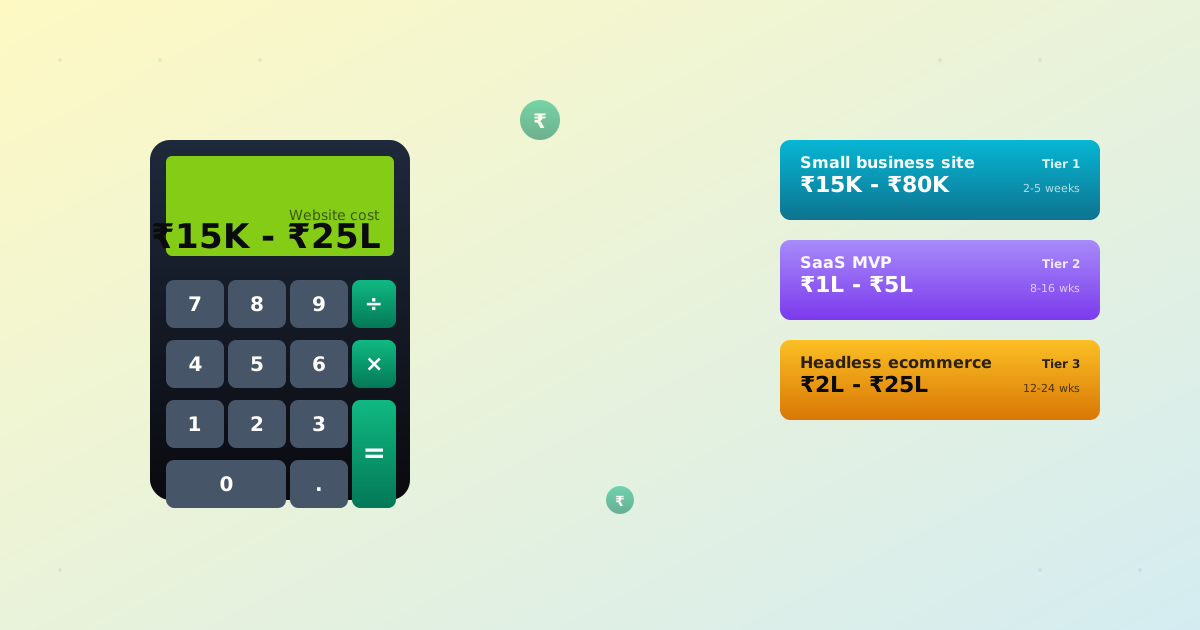
Website Development Cost in India: 2026 Complete Guide (₹15K Static to ₹25L SaaS)
Real 2026 INR website costs by type: ₹5-25K static, ₹15-80K small business, ₹20K-2L Shopify, ₹2-8L headless, ₹5-25L SaaS, plus mobile apps and EV CSMS. The hidden costs founders miss, GST reality, and red flags.
 Pricing
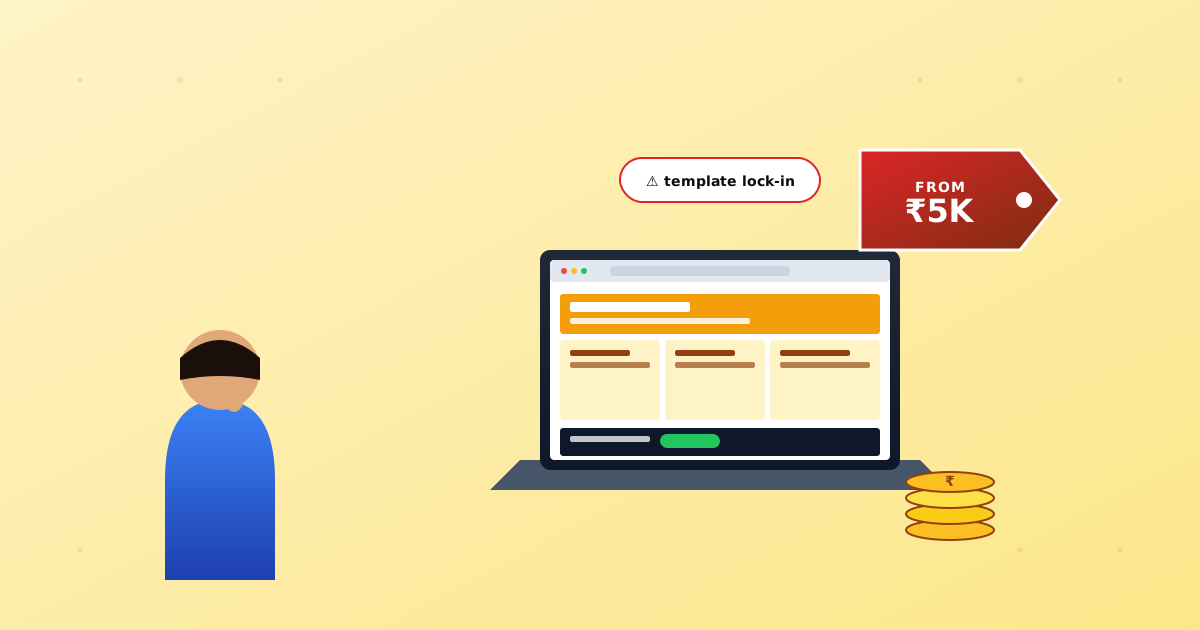
Cheap Website in India Under ₹10,000 in 2026: 6 Honest Options + What You Actually Get (and Lose)
Founders ask me weekly, "Ravi, I have ₹8-10K. Can I get a working website?" Yes, but with real trade-offs. Here are 6 honest options (Wix Free, Wix Paid, GoDaddy, Fiverr, Indian freelancer, DIY with AI), what works for who, and the hidden cost trap that turns a ₹5K website into ₹20K by month 6.
 Business
Website Builder vs Custom Website in India 2026: An Honest Decision Guide
Wix, Squarespace, Shopify, or a custom build? The internet gives you absolute answers and both are wrong. The honest call depends on where your business is right now. This is the no-spin guide for Indian businesses in 2026: when a builder is genuinely the smart choice, when you have outgrown it, the real three-year cost, ownership and lock-in, and the migration path between them.
 Business
Your ₹15,000 Website Is Costing You ₹5 Lakh a Year, The Math Nobody Shows You
Before you save ₹40,000 on a cheap website, read this. We break down the exact rupee cost of missed leads, lost credibility, and zero Google rankings, and show you when a proper rebuild pays for itself in under 90 days.
 Backend
Tally Integration With Your Website or Custom Software (India, 2026): How It Actually Works, What It Costs, and When to Build vs Buy
Tally integration with a website or custom software, explained the way it actually works: the XML API on port 9000, TDL and ODBC, build versus buy, real 2026 India costs, and how to stop duplicate vouchers in TallyPrime.