We build Next.js, Shopify, Laravel, Flutter, in Noida, India. Free 1-page audit, no obligation.
Get a free quote- OCPP and UPI: How EV Chargers in India Can Take Payments Without an AppJuly 27, 2026
- How to Take Orders on WhatsApp for Your Small Business in India (2026)July 24, 2026
- The website that kept Meera's oven warmJuly 21, 2026
- Build a Subscription Billing System in India (2026)July 20, 2026
- What website maintenance actually includes
- What breaks when you skip maintenance
- Website maintenance and AMC cost in India 2026
- AMC vs a monthly retainer: what is the difference
- Your platform decides the cost
- Do you actually need paid maintenance?
- What to look for in a maintenance provider
- How we handle maintenance
- Common questions about website maintenance
- Honest summary
 Guides
Website Maintenance & AMC Cost in India 2026: What You Actually Pay For
Most people think a website is a one-time purchase. You pay, it gets built, it goes live, and that is that. Then six months later the contact form silently stops sending emails, a plugin update breaks the layout, the site gets slow, or worse, it gets hacked and starts redirecting visitors to a gambling site. Nobody noticed, because nobody was paying anyone to watch.
Website maintenance is the unglamorous work that keeps a site secure, fast, working, and findable after launch. It is also the part most quotes conveniently leave out. This is the honest guide to what website maintenance and an AMC (annual maintenance contract) actually cost in India in 2026, what you get for the money, and when you genuinely need it versus when you can skip it.
We maintain the sites we build, usually on a monthly retainer or an AMC, so this comes from running real maintenance, not selling a package. One thing up front: the cost depends heavily on what your site is built on, which we will get into.
What website maintenance actually includes
Maintenance is not one thing. A real plan covers most of these:
- Security updates and patching. Keeping the CMS, plugins, libraries, and server packages current so known vulnerabilities are closed before someone exploits them.
- Backups. Automated, off-site, and actually tested. A backup you have never restored is a hope, not a backup.
- Uptime monitoring. Knowing the site is down before your customers tell you, ideally with alerts and a fast fix.
- Updates and dependency management. Plugin, theme, framework, and package updates, applied carefully so an update does not break the site.
- Bug fixes. The form that stopped sending, the button that broke on mobile, the image that will not upload.
- Small content changes. New prices, a new team member, a seasonal banner, a blog post upload.
- Performance. Keeping load times fast as content and images pile up. Speed decays if nobody watches it.
- SEO and analytics health. Making sure tracking still works, the sitemap is valid, and nothing quietly de-indexed.
What breaks when you skip maintenance
Skipping maintenance feels free, right until it is not. The usual failures:
- Hacks. Outdated WordPress and plugins are the single biggest cause of small-business site hacks in India. A hacked site can get blacklisted by Google, which is far more expensive to fix than to prevent.
- Silent breakage. Forms, payment links, and integrations fail quietly. You lose leads and orders for weeks before noticing.
- Downtime. Expired hosting, an SSL certificate that lapsed, or a server that fell over, and your site is offline during business hours.
- Speed decay. Unoptimised images and plugin bloat pile up. A slow site loses visitors and rankings.
- SEO drift. Broken links, de-indexed pages, and analytics that stopped recording months ago.
Website maintenance and AMC cost in India 2026
Honest INR ranges. Treat these as 2026 starting points; the real number depends on your platform, traffic, and how much hands-on work you need each month.
- Basic care (₹2,000 to ₹5,000 / month): updates, backups, uptime monitoring, security patching, and a small bucket of minor fixes. Good for a simple brochure or small business site.
- Standard maintenance (₹5,000 to ₹15,000 / month): everything above plus regular content changes, performance tuning, monthly reporting, and priority bug fixes. Good for active business sites and small stores.
- Premium and e-commerce (₹15,000 to ₹40,000+ / month): for stores and web apps, faster response SLAs, feature work, integration upkeep, and proper monitoring. Cost scales with complexity and how fast you need issues fixed.
An AMC is usually one of these tiers billed yearly, often at a small discount for paying upfront. Some agencies also offer pay-as-you-go hourly support (around ₹800 to ₹2,500 per hour) instead of a retainer, which suits sites that need work only occasionally.
AMC vs a monthly retainer: what is the difference
People use the terms loosely, but there is a real distinction:
- AMC (annual maintenance contract): a yearly agreement at a fixed price, often paid upfront or quarterly. Predictable, usually cheaper per month, good once you trust the provider.
- Monthly retainer: a set number of hours or a scope billed each month, cancellable monthly. More flexible, slightly higher per month, good when you are starting out.
Either way, what matters more than the label is what is actually covered, how fast they respond, and whether small changes are included or billed extra. Get that in writing.
Your platform decides the cost
This is the part most cost guides skip. What your site is built on changes maintenance cost more than anything else.
- WordPress and WooCommerce: the most common, and the most maintenance-hungry. Plugins and themes update constantly, security patching is ongoing, and updates can break things, so it needs active hands. Budget for the higher end.
- Next.js, React, and static sites: far less routine maintenance. No plugin ecosystem to patch weekly, a much smaller attack surface, and dependencies update on your schedule, not the world's. A modern Next.js build often needs a fraction of the upkeep a WordPress site does.
- Custom web apps: maintenance is mostly the server, dependencies, and feature work. Pairs with proper cloud and DevOps so updates and monitoring are automated.
If your maintenance bill feels high, the platform is often why. We have moved clients off heavy WordPress setups specifically to cut ongoing maintenance cost and risk. Where the site lives matters too; our web hosting guide covers the options.
Do you actually need paid maintenance?
Honest answer: it depends on the site and your risk tolerance.
- You can probably skip a formal plan if: it is a simple static site, on a modern stack, with no logins or payments, and you are comfortable doing the occasional update yourself.
- You almost certainly need it if: you run WordPress, you take payments or store customer data, the site is core to your business, or downtime costs you money. The cost of one hack or a week of a broken checkout dwarfs a year of maintenance.
The mistake is paying for a heavy plan on a site that does not need one, or running a business-critical store with no plan at all. Match the plan to the risk. And remember maintenance is not a redesign; if your site mostly feels dated, that is often a tune-up, not a rebuild.
What to look for in a maintenance provider
- A clear scope in writing. What is included, what is billed extra, and how many change requests per month.
- A real response-time commitment. 'We will look at it sometime' is not a plan. Ask what happens when the site goes down at 9 PM.
- Tested backups you can actually restore. Ask how often they back up and whether they have ever restored one.
- No lock-in. You should own your code, hosting, and domain, and be able to leave with everything.
- Transparent reporting. A monthly note on what was updated, fixed, and monitored, in plain language.
How we handle maintenance
We keep it simple and honest. Most clients we build for stay on a monthly retainer or an AMC: security patching, tested off-site backups, uptime monitoring, dependency updates, performance checks, and a bucket of small changes each month, with a clear report on what we did. We bias toward building on stacks that need less maintenance in the first place (Next.js and React over heavy WordPress where it fits), so you pay for value, not for fighting plugin updates. You own your code, hosting, and domain throughout, with no lock-in. It pairs with our hosting and cloud setup so monitoring and updates are automated rather than manual.
Common questions about website maintenance
How much does website maintenance cost in India?
Basic care (updates, backups, monitoring, security) runs ₹2,000 to ₹5,000 per month. Standard maintenance with content changes and performance tuning is ₹5,000 to ₹15,000 per month. E-commerce and web apps run ₹15,000 to ₹40,000+ per month depending on complexity and response speed. An AMC bills one of these yearly, often at a small discount. The biggest cost factor is your platform: WordPress needs more upkeep than a Next.js or static site.
What is an AMC for a website?
An AMC (annual maintenance contract) is a yearly agreement to keep your site updated, secure, backed up, monitored, and working, for a fixed annual fee. It usually covers security patching, backups, uptime monitoring, updates, and an agreed amount of small changes. Read what is included and what is billed extra before you sign.
Is website maintenance really necessary?
For a simple static site with no logins or payments, you can often get by with occasional self-managed updates. For WordPress sites, stores, or anything taking payments or storing customer data, yes, it is necessary. The cost of one hack, a blacklisted domain, or a week of a broken checkout is far higher than a year of maintenance.
Why is WordPress maintenance more expensive?
WordPress relies on plugins and themes that update constantly and are the most common entry point for hacks. Keeping them patched, tested, and not breaking each other is ongoing hands-on work. Modern stacks like Next.js have no plugin ecosystem to patch weekly and a much smaller attack surface, so they need far less routine maintenance.
Can I do website maintenance myself?
Some of it, yes, if you are comfortable with updates and backups and your site is simple. The risk is the things that are easy to miss: an untested backup, a security patch you skipped, a form that quietly broke, or a slow speed decay. For a business-critical site, paying someone to watch it is usually cheaper than the first thing that goes wrong unnoticed.
What happens if I do not maintain my website?
Usually nothing, until something. Outdated software gets hacked, plugins break the layout, forms and payment links fail silently, SSL certificates lapse, and speed and SEO decay. Most of these are invisible until they cost you customers or a cleanup that is far more expensive than prevention.
Honest summary
A website is not a one-time purchase, it is something that needs looking after, like anything that runs every day. Maintenance keeps it secure, fast, working, and findable, and the cost depends mostly on your platform: WordPress needs the most, modern stacks need the least. Basic care starts around ₹2,000 to ₹5,000 a month; stores and apps cost more. Match the plan to the risk, get the scope in writing, and make sure you own everything.
If you want a maintenance plan that fits your site rather than a padded package, the cost calculator gives a rough starting point, or send us a WhatsApp message with your site URL and platform, and we will reply within 24 hours with an honest plan and an INR range.
Worried your site is running with nobody watching it? We maintain websites and stores in Noida: security patching, tested backups, uptime monitoring, updates, and small changes on a clear monthly retainer or AMC. You own your code, hosting, and domain. No lock-in, plain-language reporting.
Get a maintenance planFounder of buildbyRaviRai, a web development agency based in Noida, India. 5+ years shipping Next.js, WordPress, Shopify, and Laravel projects for clients in India, USA, Canada, and the UK.
Working with us in your city
Keep Reading
 Pricing
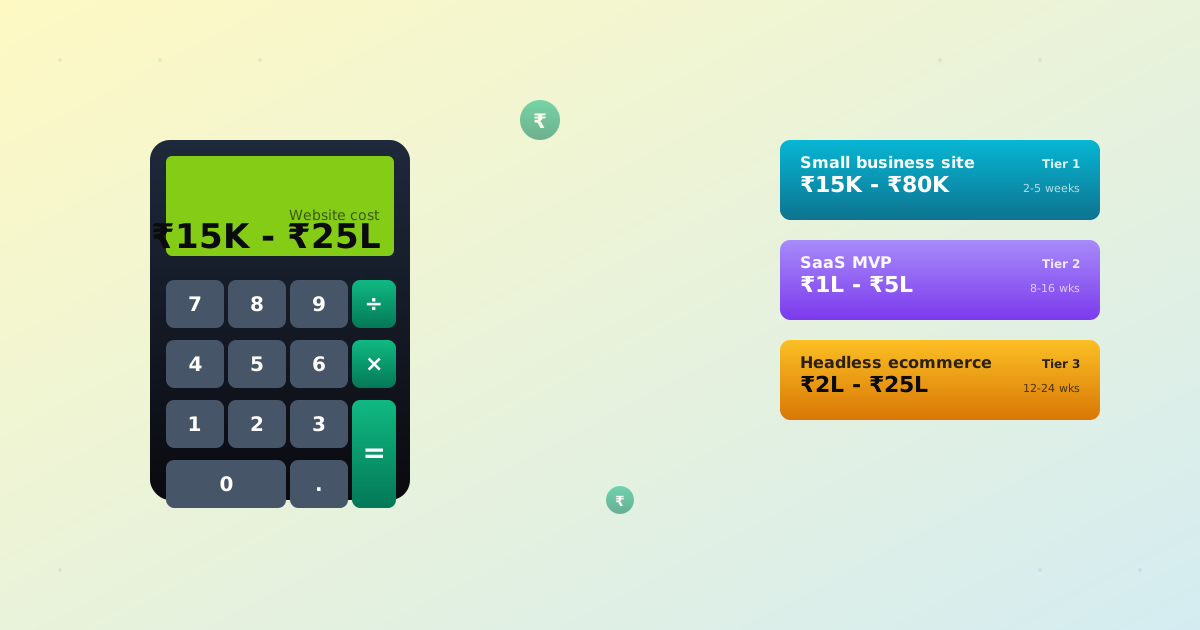
Website Development Cost in India (2026 Guide)
Real 2026 INR website costs by type: ₹5-25K static, ₹15-80K small business, ₹20K-2L Shopify, ₹2-8L headless, ₹5-25L SaaS, plus the hidden costs founders miss.
 Guides
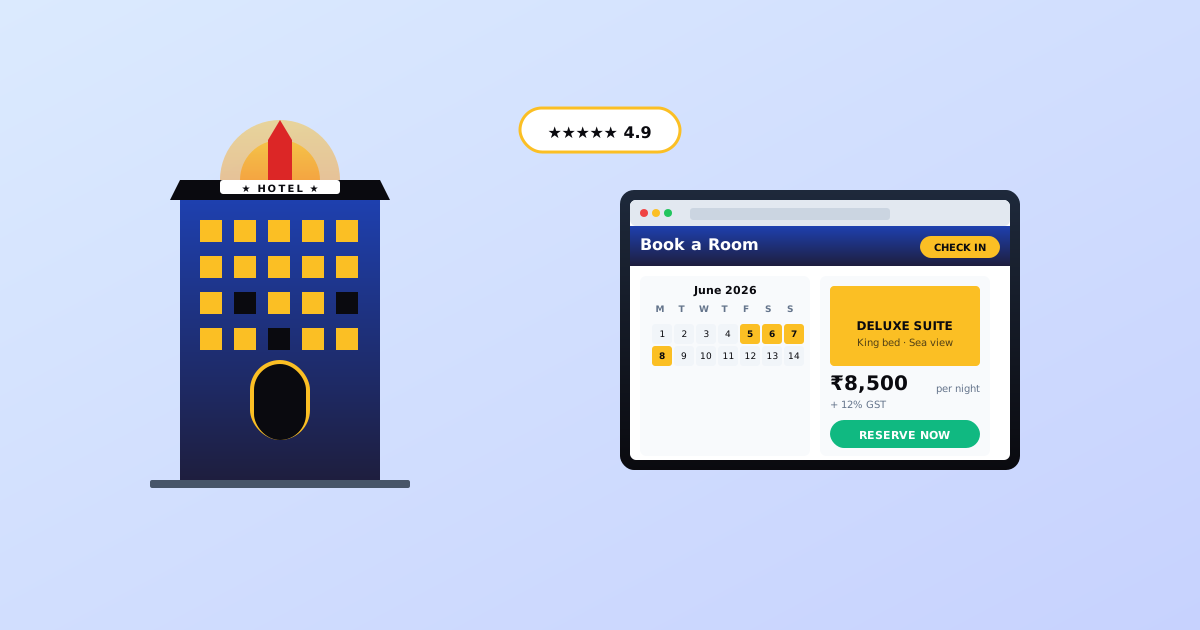
Hotel Website Development in India: What Booking Features, OTA Integrations, and 2026 Pricing Actually Look Like
Indian hotels leak 30-50% of direct bookings to OTAs because their websites can't handle real-time availability or channel sync. Real 2026 pricing (₹40K-8L).
 Guides
Website Security for Indian Businesses 2026: The Basics That Actually Stop Most Attacks
The plain-language guide to website security basics for Indian business owners in 2026: what actually attacks your site, and the few things that protect it.
GuidesAI Website Builders vs Hiring a Developer in India 2026: The Honest Take
AI can build a website in two minutes, so why pay a developer? The honest answer: what AI website builders are good at, where they fall apart, and the hidden costs.
GuidesTop 10 Web Developers in India 2026: The Honest Criteria + How to Actually Pick One (Not Just a Listicle)
Most 'Top 10 Web Developers in India' lists are paid placements. The honest version: 7 criteria separating top-tier shops, 5 categories, 4 disqualifying questions.