We build Next.js, Shopify, Laravel, Flutter, in Noida, India. Free 1-page audit, no obligation.
Get a free quote- DLT Template Rejected? Fixes and Samples That Pass (2026)September 27, 2026
- Unified Bharat e-Charge (UBC), Explained for EV OperatorsSeptember 25, 2026
- AI Chatbot Development Cost in India (2026): Build and RunSeptember 25, 2026
- The javax to jakarta Break: Why Your Old Java App Is Stuck, and What It Costs to MoveSeptember 19, 2026
Website Development Quotation: Format and Sample (2026)
When someone sends me a quotation from another agency and asks whether it's fair, half the time I can't answer, and not because the price is odd. It's because the document is one line long. "Website design and development: ₹45,000." No pages, no features, no timeline, nothing about what happens after launch. You can't judge a number when you don't know what it buys.
So this is the guide I wish those clients had read before they asked for quotes. It covers what a website development quotation in India should actually contain, a sample format you can copy and send to any agency, what fair prices look like in 2026, and how to line up three quotes so you're comparing the same thing. I run an agency, so yes, I'd like you to ask us for a quote too. But everything here works just as well with anyone else.
What a website development quotation should contain
A good quotation reads more like a short scope document than a bill. If you strip the price off it, you should still be able to picture the finished website. These are the parts I'd expect to see, roughly in this order.
- The pages, listed by name. Home, About, Services, one page per service or a single combined one, Contact, Blog. "5-8 pages" is a range, not a scope.
- The features, each on its own line. Contact form, WhatsApp button, blog with categories, product catalogue, online payments, booking calendar, login area. Anything that needs its own logic gets its own line.
- The design approach. A bought theme adapted to your brand, a semi-custom design on a known framework, or a fully custom design with mockups you approve first. These are very different amounts of work and they should be named.
- The technology and where it will be hosted. WordPress, Shopify, Next.js or something else, and whose hosting account it lives on.
- Who provides the content. If you're writing the text and supplying photos, it should say so. If the agency is writing it, it should say how many pages of copy.
- The timeline, split into milestones with dates, not just "4 weeks".
- The payment schedule, tied to those milestones.
- What is not included. Domain, hosting, paid plugins, SMS or payment gateway fees, copywriting, photography, ongoing maintenance. The exclusions are where cheap quotes hide.
- Support after launch. How many days of free bug fixes, and what counts as a bug rather than a new request.
- Ownership. Whose name the domain, hosting, and admin accounts are in, and whether you get the source code.
- Tax and validity. Whether 18% GST is included or extra, and how long the price holds.
If a quote you've received is missing more than two or three of these, don't reject it. Ask for them. A serious agency will send a revised version within a day or two. One that can't tell you what's excluded usually hasn't thought about it yet, and you'll find out during the project instead.
A sample quotation format you can copy
Here is the shape I'd want a quotation for a typical small business website to take. The business is made up and the figures are placeholders, so don't read them as prices. Copy the structure, send it to the agencies you're talking to, and ask them to fill it in. It makes three quotes directly comparable, which is the whole point.
textQUOTATION  |  Website development for [Your Business Name]
Quote no. [ ]      Date: [ ]      Valid until: [date, usually 30 days]

1. SCOPE: PAGES
   Home, About, Services (x3 separate pages), Contact, Blog listing + post template
   Total: 8 page templates

2. SCOPE: FEATURES
   - Contact form with email notification and spam protection
   - WhatsApp chat button
   - Blog with categories, editable by you
   - Google Maps embed on Contact
   - Basic on-page SEO: titles, descriptions, sitemap, Search Console setup

3. DESIGN
   Semi-custom design on [framework/theme], 2 rounds of revisions on the homepage

4. TECHNOLOGY AND HOSTING
   Built on [WordPress / Next.js / Shopify]
   Hosted on [provider], account in the client's name

5. CONTENT
   Client supplies text and photos by [date]. Copywriting not included.

6. TIMELINE
   Week 1: design approval   Week 3: development complete   Week 4: launch

7. PRICE
   Design and development ........................ Rs [ ]
   GST at 18% ..................................... Rs [ ]
   Total ........................................... Rs [ ]

8. PAYMENT SCHEDULE
   30% on signing, 30% on design approval,
   30% on development complete, 10% on launch and handover

9. NOT INCLUDED
   Domain, hosting fees, paid plugins or apps, payment gateway and SMS charges,
   copywriting, photography, ongoing maintenance

10. AFTER LAUNCH
   30 days of free bug fixes. New features and content changes quoted separately.

11. OWNERSHIP
   Domain, hosting and all admin logins in the client's name.
   Source code and design files handed over on final payment.
Two lines in there matter more than they look. "Account in the client's name" and "handed over on final payment" are what stop you from being locked in later. The rebuild nobody wants is the one where the previous developer registered the domain under their own account and then stopped answering the phone. A quotation that says who owns what, in writing, before any money moves, is the cheapest insurance you'll ever buy.
What a fair price looks like in 2026
Prices in India genuinely range from a few thousand rupees to several lakh for things that are all called "a website", so a single average is useless. What helps is knowing roughly where the floor is for each kind of build. Our own published starting prices are on the pricing page, all excluding 18% GST, and they're a fair reference for the market. A one-page marketing site starts around ₹3,500. A 5-8 page small business site starts around ₹10,500. A standard Shopify storefront starts around ₹25,000, and a SaaS marketing site in Next.js around ₹28,000. Anything with logins, dashboards or multiple user types moves into a different band, with a SaaS MVP starting around ₹70,000.
Those are starting points for a clear scope, not the number for your project. The things that push a quote up are the ones in the sample above: more page templates, custom design instead of a theme, each feature that needs its own logic, and a short deadline. If you want a figure before you talk to anyone, the website cost calculator gives an INR starting estimate from the type of site, the features, the design tier and your timeline. The 2026 cost guide explains where each rupee goes.
One more thing about the number itself. Ask whether it's fixed-price or an estimate of hours. A fixed price against a written scope is easier to budget, and it puts the risk of the work taking longer on the agency, which is where it belongs. An hourly estimate isn't wrong, but it should come with a cap.
How to compare three quotes without being fooled
Put the quotes side by side and ignore the totals for a minute. Go through the sample format line by line and mark where each one is silent. You'll usually find the cheapest quote is cheapest because it leaves things out: no blog, a theme with your logo dropped in, hosting on the agency's account, or "support" that ends the day the site goes live. Once you add those back, the gap often closes, or flips.
Then ask each agency the same three questions. What happens if I want a change after design approval, and what does it cost? Who exactly will build this, and can I talk to them? Can I see two live sites you built, not screenshots? The answers tell you more than the price. An agency that has a clear change-request rate and puts you on a call with the developer is one you can work with for years. There's a longer list of questions in our guide to vetting a web development agency if you want to go deeper.
Last, look at the payment schedule. Milestone payments protect both sides. A quote asking for 100% upfront protects only one of them, and it isn't you.
Red flags in a website quotation
- A single line with a single price and no list of pages or features.
- Full payment upfront, or more than half before you've seen a design.
- No mention of who owns the domain, hosting and logins.
- "Unlimited revisions". It sounds generous and usually means nobody has scoped the design.
- A price far below the rest for the same scope, with no explanation. Something is missing, or the work will be.
- No validity date and no GST line, which usually means the number will move once you say yes.
What to send an agency so the quote is accurate
The quality of a quotation depends a lot on the brief you send. You don't need a formal document. A WhatsApp message or an email with these details is enough for a good agency to come back with a real number instead of a guess.
- What the website is for: leads, bookings, online sales, or credibility when people look you up.
- The pages you think you need, even if the list is rough.
- Two or three websites you like, and what you like about them.
- Features you know you want: payments, booking, WhatsApp, a login area.
- Whether your text and photos are ready.
- Your deadline, and whether it's real or just hopeful.
- A budget range. It isn't a trap. It lets the agency tell you what fits, rather than quoting the most expensive version of everything.
If you send us exactly that through the quote form, you get a flat quote with a written scope within 24 hours, laid out much like the sample above. If our number isn't the right one for you, you've still got a document you can hold every other quote against.
Send us your pages, features and deadline. You'll get a flat INR quote with a written scope, milestones and exclusions within 24 hours, no obligation.
Get a written quoteThe short version
A website development quotation is only worth comparing when it lists the pages, the features, the design approach, the timeline, the payment schedule, what's excluded and who owns what. Ask every agency to fill in the same format, compare line by line before you compare totals, and treat a one-line quote as a first draft rather than an answer.
Frequently asked questions
What is a website development quotation?
Is GST included in a website quotation in India?
How much advance should I pay for website development?
Why do website quotes in India vary so much?
How long is a website quotation valid?
Founder of buildbyravirai, a web development agency based in Noida, India. 5+ years shipping Next.js, WordPress, Shopify, and Laravel projects for clients in India, USA, Canada, and the UK.
Working with us in your city
Keep Reading
 Pricing
Website Development Cost in India (2026 Guide)
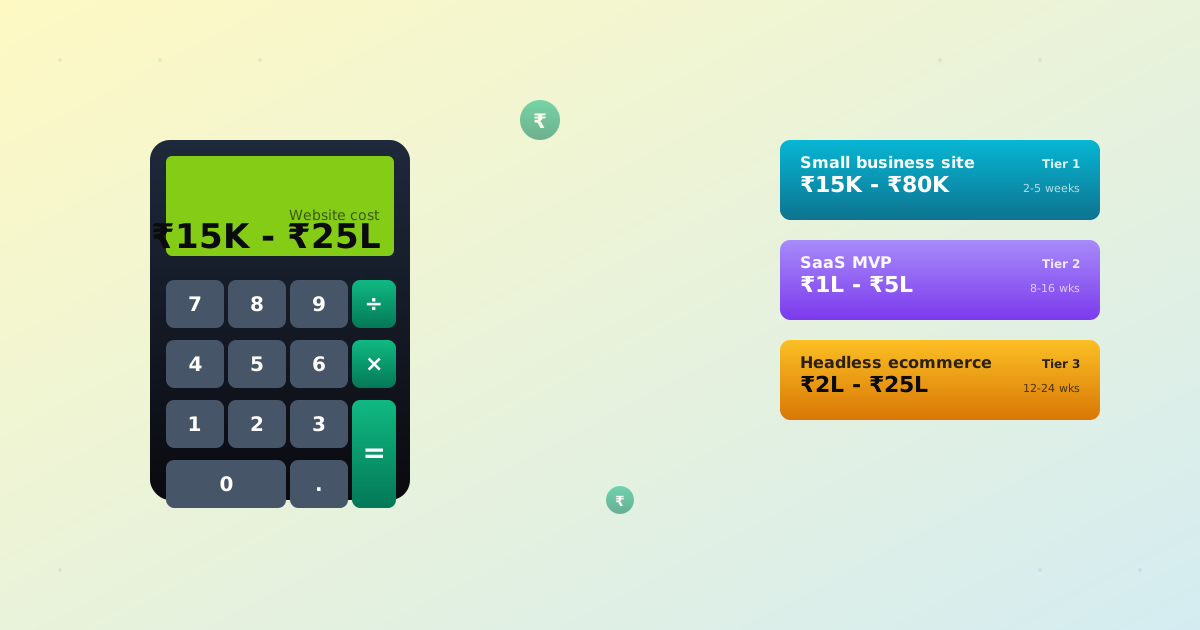
Real 2026 INR website costs by type: ₹5-25K static, ₹15-80K small business, ₹20K-2L Shopify, ₹2-8L headless, ₹5-25L SaaS, plus the hidden costs founders miss.
Is a New Website Actually Worth It for Your Small Business? The Honest ROI Math (India, 2026)
Every Indian small-business owner asks the same quiet question before spending on a website: "will I actually get my money back?" Most agencies dodge it. This is the honest ROI math, with a real worked example using Indian numbers, what different budgets actually return, when a new website is NOT worth it, and how to work out your own number in 5 minutes.
 Guides
Hotel Website Development in India: What Booking Features, OTA Integrations, and 2026 Pricing Actually Look Like
Indian hotels leak 30-50% of direct bookings to OTAs because their websites can't handle real-time availability or channel sync. Real 2026 pricing (₹40K-8L).
Website Security for Indian Businesses 2026: The Basics That Actually Stop Most Attacks
The plain-language guide to website security basics for Indian business owners in 2026: what actually attacks your site, and the few things that protect it.
DLT Template Rejected? Fixes and Samples That Pass (2026)
Why DLT SMS templates get rejected or fail with "template not found" in 2026, the pre-tagging rules behind it, and sample templates that get approved.